You do not need a ticket to watch seaweed farmers on Nusa Lembongan. The plots sit in the shallow channel between Lembongan and Ceningan and are easiest to see at morning low tide. The only real question is whether to ride over on a rented scooter or join an island tour.
What will you actually see?
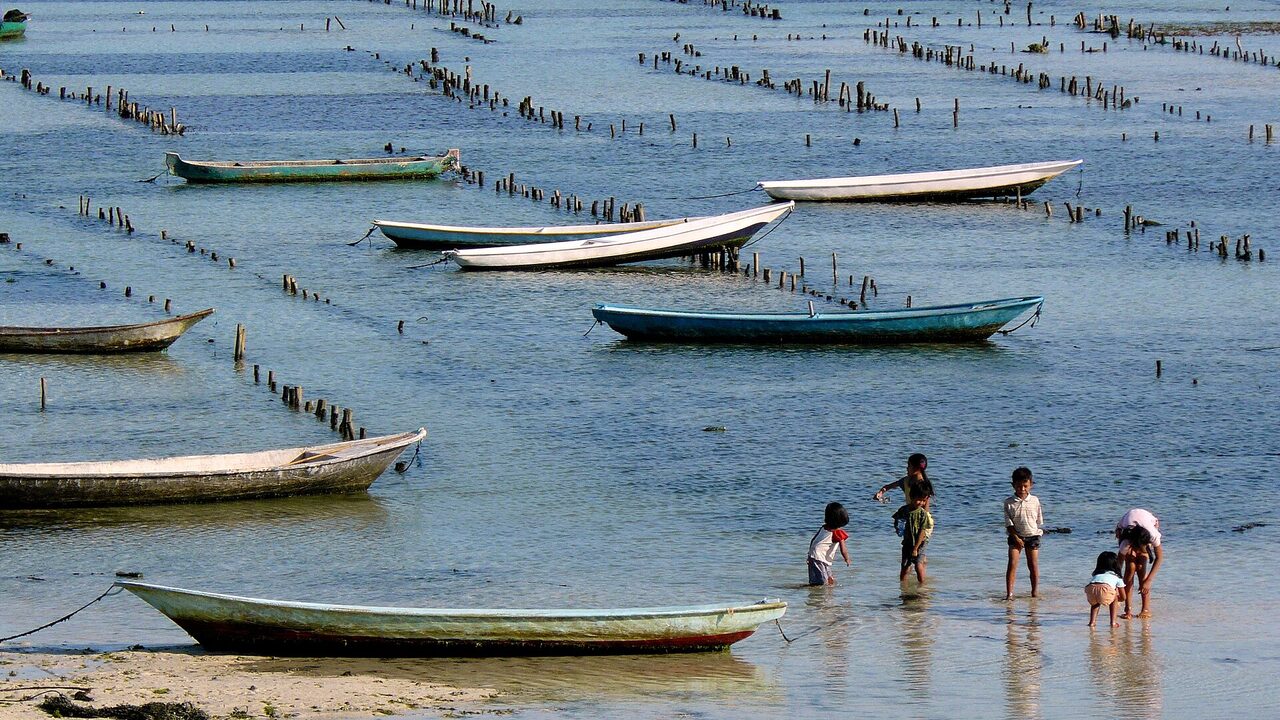
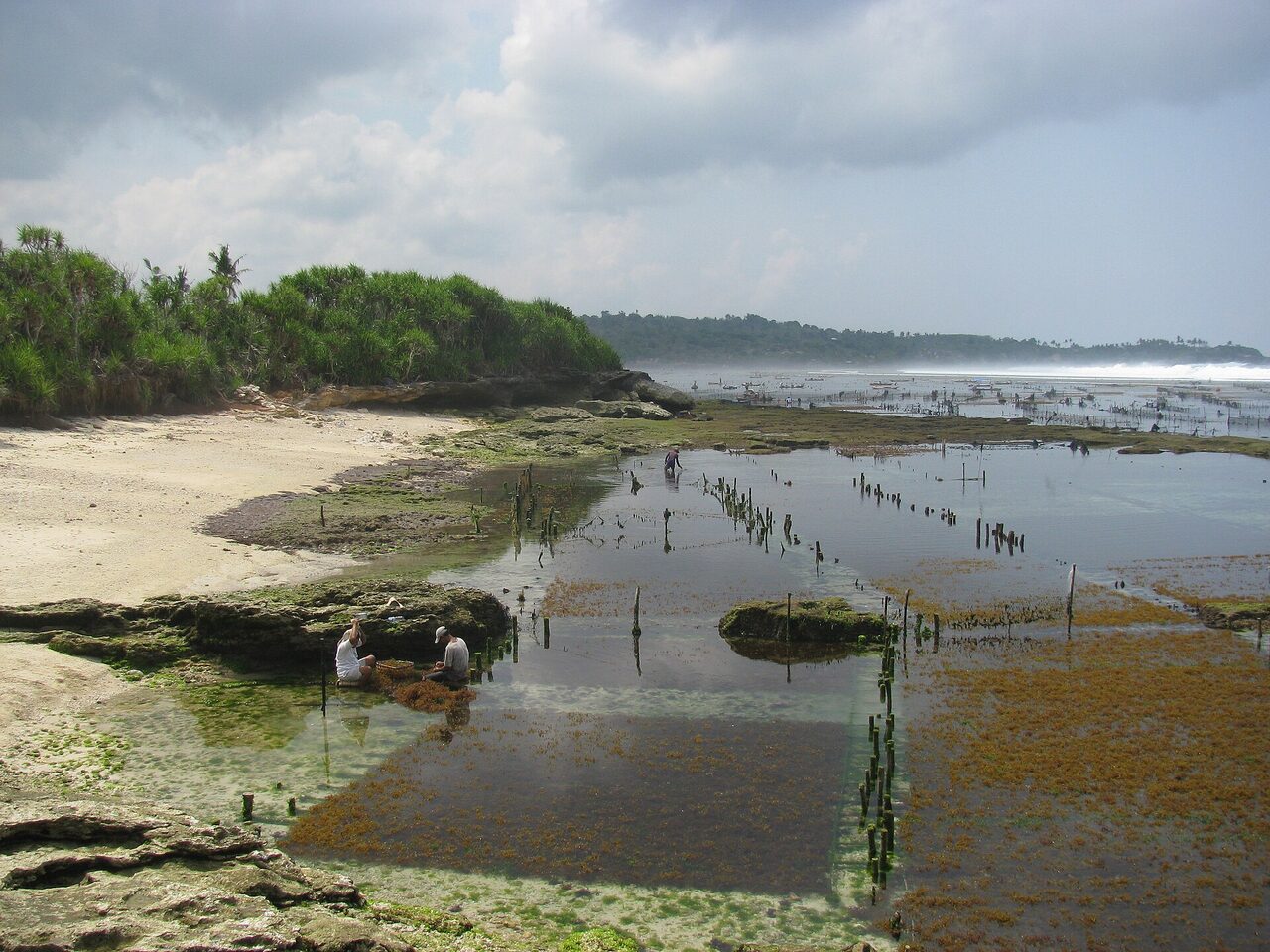
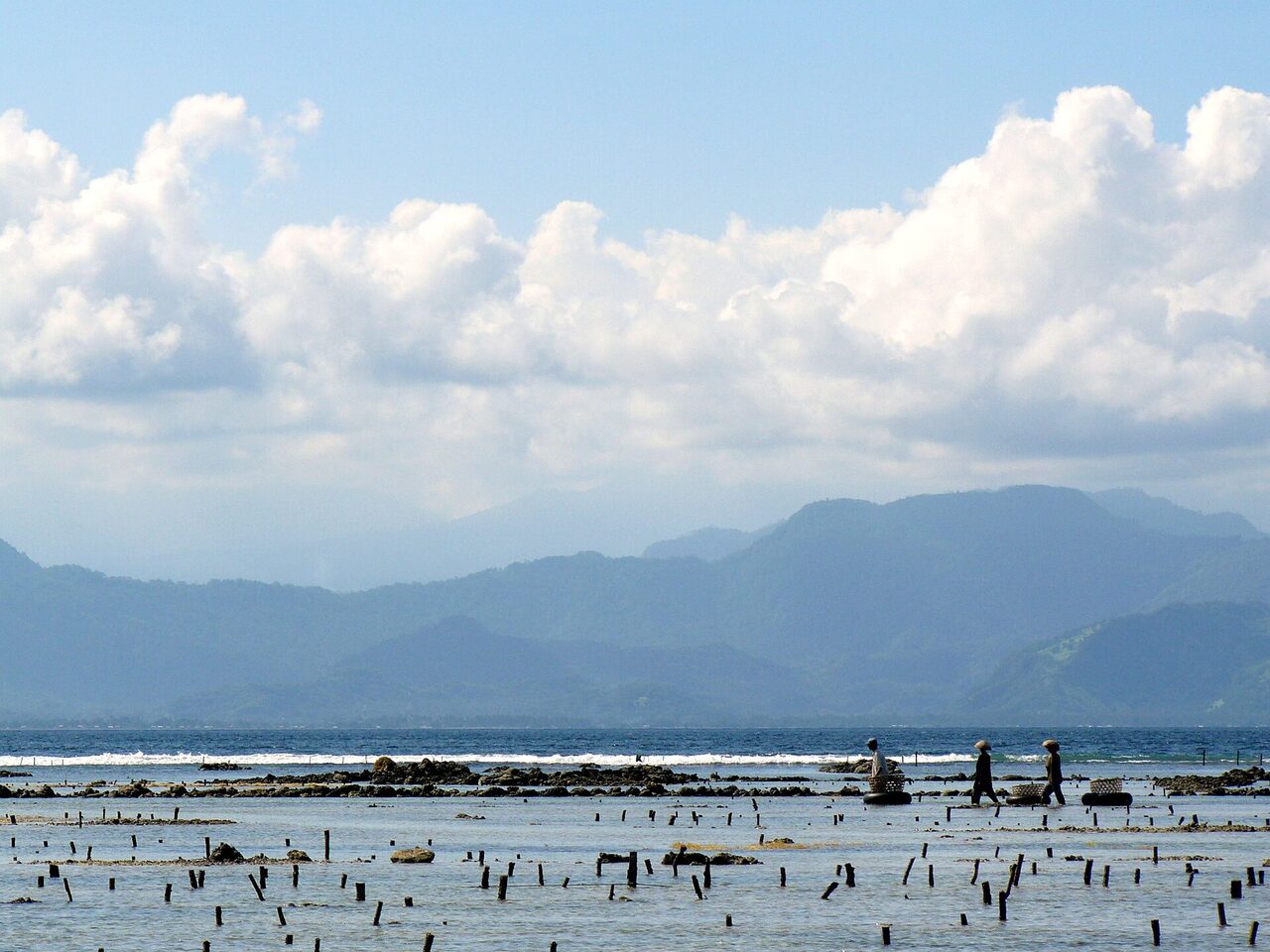
Rows of lines strung with seaweed seedlings, mostly Eucheuma cottonii, which is processed into carrageenan, pegged to the shallow seabed. Farmers paddle out in jukung outriggers, check their plots at low tide and harvest. According to The Lembongan Traveller, harvests fall around the full and new moon, roughly every 15 days, sometimes at night by head torch. A July 2025 feature in What's New Indonesia puts the cycle at 30-45 days per plot, with dried seaweed selling to collectors for about Rp14,000 per kg (under US$1).
Farming started here in the early 1980s in Jungutbatu Bay, was largely abandoned as tourism grew, and picked up again during the pandemic.
Going alone: when and where?
- Cost: free, apart from scooter rental.
- Timing: morning low tide. Check a Badung Strait tide table the day before; at high tide the plots are underwater and there is little to see.
- Where to look: the Lembongan-Ceningan channel around the Yellow Bridge. Green seaweed varieties are also grown near the mangroves in the north.
- Etiquette: do not wade into plots or step on seedling lines without permission. They are someone's crop. Ask before photographing farmers up close.
Taking a tour: when does it make sense?
Half-day island tours from Jungutbatu usually include the seaweed farms as one stop alongside the Mangrove Forest, Yellow Bridge and Devil's Tear. The village ecotourism network JED has offered educational visits with a farmer plus a homestay night; Frommer's lists roughly US$105-130 per person, so ask for the current rate. A tour is worth it if you want the farmers' story or a go at tying seedlings.
The downsides
The farmed area is far smaller than before tourism, and farmer numbers rise and fall with the island economy, so there is no guarantee you will catch a harvest. Drying areas smell strongly fishy by midday. The shallow seabed is rocky and slippery, so wear water shoes.
So which one?
If you have already rented a scooter for the Yellow Bridge, going yourself at a morning low tide is enough. Choose a tour or JED if you want the story behind the farming, because without a guide you only see lines and boats from a distance.
Getting There
- Location: View on Google Maps
- Access: fast boat from Sanur to Jungutbatu, then scooter to the channel side. Boat details are in our Lembongan transport guide.
- Instagram: search on Instagram
- Ticket: none. Checked October 2026.
One last note: low tide shifts by about an hour each day, so last week's perfect time may not work this week.

Comentarios 0
Aún no hay comentarios. ¡Sé el primero en comentar!