Bali is not only beaches. Within two hours of Ubud you can choose a sandy volcanic summit, a damp mountain rainforest, or a flat rice-field path you can walk with a coffee in hand. This guide covers the most relevant trekking and hiking routes in Bali for 2026, with elevation, duration, difficulty, start times and guide price ranges.
Volcanoes and Main Summits
- Gunung Batur (Kintamani, about 1,717 m) — Bali's most popular sunrise climb: 1.5–2 hours up from the Toya Bungkah basecamp, starting 03.00–04.00, moderate difficulty. A guide is MANDATORY and the local guide association runs checkpoints. Group packages cost around Rp350,000–600,000 per person plus an area ticket of roughly Rp100,000–150,000. Maps
- Gunung Agung (Karangasem, about 3,031 m) — Bali's highest and most sacred peak, a hard climb. Via Pura Pasar Agung it is about 3–4 hours up to the southern crater rim (7–9 hours round trip); via Besakih it is 6–7 hours up to the true summit (10–12 hours round trip). You start around midnight. A registered guide is required, roughly Rp600,000–750,000 via Pasar Agung and Rp750,000–900,000 via Besakih. The mountain closes during major ceremonies. Maps
- Gunung Batukaru (Tabanan, about 2,276 m) — the second highest peak, a rainforest trail from Desa Wongaya Gede, 4–5 hours up, quiet and often misty. A local guide is strongly advised because the trail branches often; around Rp500,000–900,000 per group. Maps
- Gunung Abang (Bangli, about 2,152 m) — Bali's third highest summit. The route from Desa Suter runs about 6–7 km, 2–4 hours up, moderate, shaded and very quiet, ending at a summit temple with views over Lake Batur. Maps
- Gunung Catur / Puncak Mangu (Bedugul–Pelaga, about 2,096 m) — mossy forest and wild monkeys, 2–4 hours up depending on the trail; the Pelaga route is the most beginner-friendly. Start early, 06.30–07.00. Pura Puncak Mangu stands at the top, so dress respectfully.
Easy Trails: Rice Fields, Forest and Waterfalls
- Campuhan Ridge Walk (Ubud) — a grassy ridge of about 2 km one way, free, no guide needed, friendly for beginners and children. Come before 08.00 because there is almost no shade. Maps
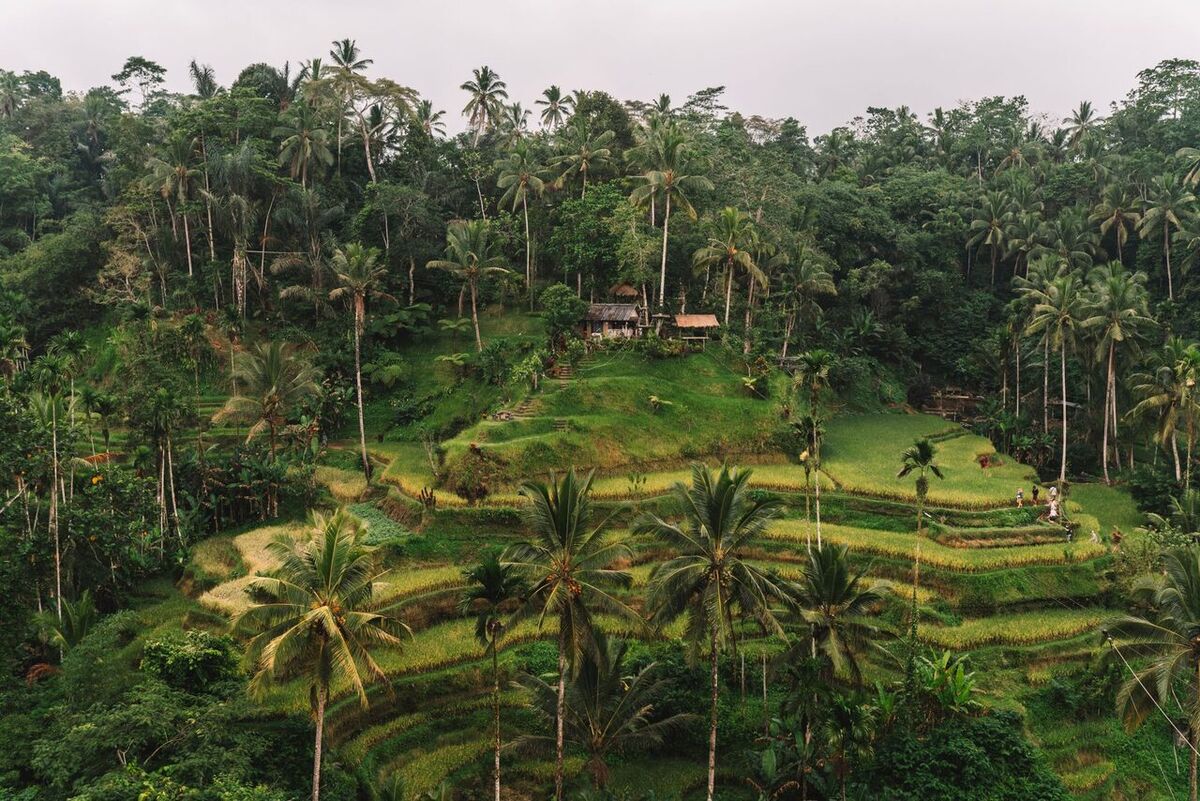
- Jatiluwih (Tabanan) — UNESCO-listed rice terrace trails with loops from 30 minutes to 3 hours, flat and family-friendly. Entrance is around Rp50,000–100,000 per person. Maps
- Sambangan / Aling-Aling (Buleleng) — a chain-waterfall trek with optional jumps and natural slides. The short package costs about Rp125,000 per person, with pricier half-day and full-day options; a guide is compulsory at the jump points. Maps
- Munduk–Tamblingan (Buleleng) — coffee and clove plantations leading into the forest along Lake Tamblingan, 2–3 hours, often bundled with canoeing. Around Rp300,000–600,000 per person depending on group size.
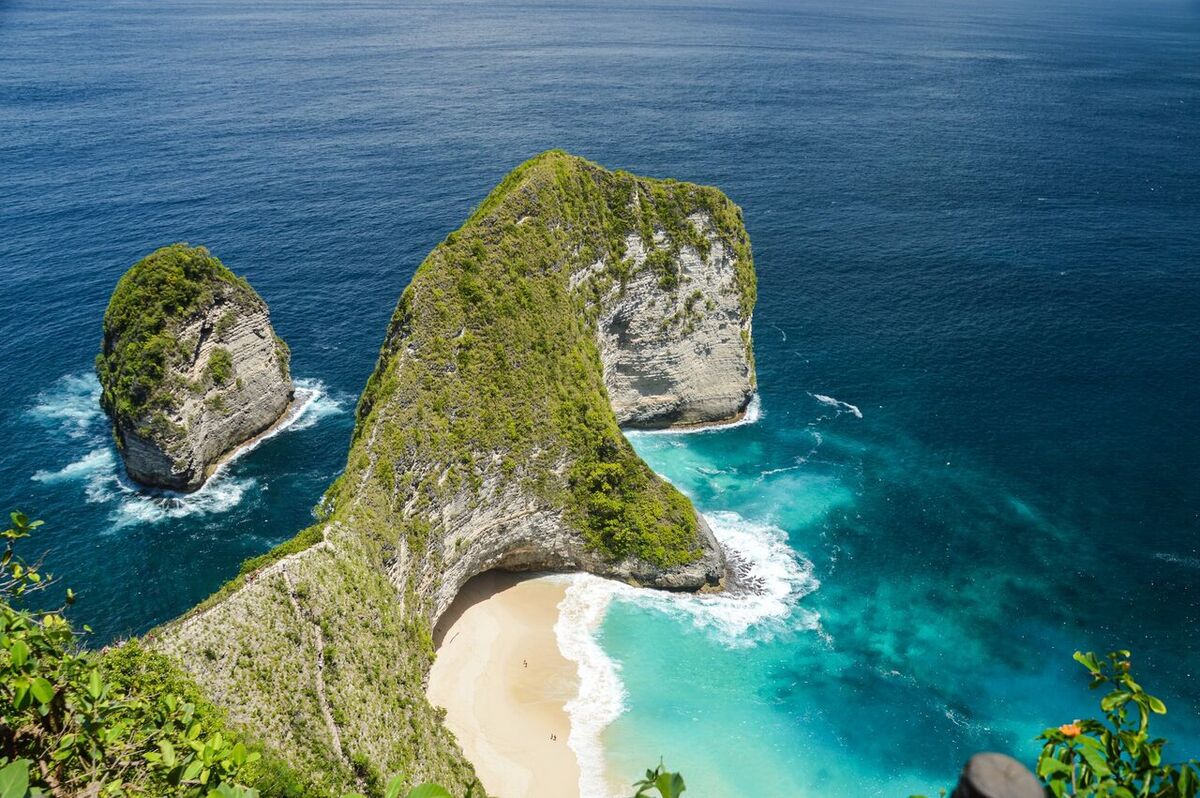
- Peguyangan Blue Stairs (Nusa Penida, optional) — not a forest trek but more than 700 blue steps down and back up a sea cliff. Entry is free, parking costs a few thousand rupiah, and a sarong is required because of the temple below. Avoid it in the rain.
When a Guide Is Mandatory and What It Costs
- Mandatory — Gunung Batur and Gunung Agung; the rule is enforced by local guide associations, not a formality.
- Strongly advised — Batukaru, Abang, Catur and the Sambangan waterfall trek, because trails branch, get slippery, or have no phone signal.
- Not needed — Campuhan Ridge Walk, Jatiluwih and Peguyangan; you only pay a ticket or parking.
- Transparency tip — ask upfront whether the price includes the area ticket, headlamp, breakfast and transfers. Keep small cash for a guide tip of about Rp50,000–100,000.
Gear, Etiquette and Best Season
- Core gear — a headlamp (not just a phone light), a windproof jacket, shoes with grip, at least 1.5–2 litres of water, snacks and a light rain jacket. Summit temperatures on Batur or Agung can drop into the teens before dawn.
- Etiquette — do not climb during ceremonies or when temples and trails are closed, never enter temple grounds in footwear, and respect local customary rules. Carry every piece of rubbish back down.
- Best season — the dry season from May to September gives the clearest skies and driest trails; January and February bring the heaviest rain and slippery ground.
Practical Info
- How to book — local guides can be booked via a trekking operator's WhatsApp, your hotel reception, or directly at the basecamp. For Batur and Agung, book at least a day ahead because of quotas and pre-dawn pickups.
- Cost range — easy trails are free to about Rp100,000, waterfall treks about Rp125,000–500,000, Batur about Rp350,000–600,000, Agung about Rp600,000–900,000.
- Best timing — start 03.00–04.00 for the Batur sunrise, around midnight for Agung, and 06.00–08.00 for easy trails to beat the heat.
Sleeping near the trailhead changes everything: a night in Kintamani, Ubud or Bedugul cuts out a 1.5–2 hour pre-dawn drive from Kuta or Canggu and saves you transport money. Compare stay vouchers on AccessiaPass to pick a hotel in the area closest to the trail you want, then set off with a full tank of energy.






Comments 0
No comments yet. Be the first to comment!