Choose rupiah (IDR). When a card terminal or ATM in Bali offers to charge you in yen, Australian dollars or won, that is Dynamic Currency Conversion (DCC), and according to Korea's Financial Supervisory Service (FSS) it typically costs about 3-8% of the transaction.
On screen the choice appears as two amounts: one in IDR, one in your card's currency, sometimes labelled "guaranteed rate" or "no surprises". The home-currency figure feels reassuring because you can read it instantly, but it is the more expensive one.
Rupiah vs home currency: a simple sum
Take a Rp1,000,000 dinner. If you pick IDR, the card network (Visa, Mastercard, JCB, UnionPay) converts at its own rate, then your bank adds its foreign transaction fee if it has one. If you pick yen, AUD or won, the terminal uses a DCC rate with a margin already built in. The FSS example in its 27 July 2025 advisory: a 1,000,000 won purchase paid with DCC was billed 1,050,000 won because of a 5% fee. On a Rp1 million dinner, a 3-8% gap means roughly Rp30,000-80,000 lost on one transaction.
Australian cards: you can pay twice
Many Australian cards charge a foreign transaction fee even when you pay in AUD. Bankwest (a division of Commonwealth Bank) states on its help page, checked 30 October 2026, that Mastercard credit cards other than Platinum and World incur 2.95% on each transaction outside Australia, including AUD transactions where the merchant or processor is overseas. So choosing AUD in Bali can mean paying the DCC margin plus 2.95%. Bankwest's Platinum Debit, Platinum Credit and World Mastercard carry no such fee. Other banks use different numbers, so check your own card's product documents.
Japanese cards: a receipt in yen is a warning sign
SMBC Trust Bank (Prestia), in a Global Compass article dated 23 March 2026, warns that choosing to pay in yen can make the total higher than paying in local currency, and that some shops only offer DCC. For local-currency transactions, Japanese cards add an overseas handling fee that, according to a pay-route.co.jp comparison (28 April 2026), usually runs 1.6-3.85% depending on the issuer. JCB acceptance in Bali is also narrower than Visa and Mastercard; see our Mir, UnionPay and JCB cards article.
Korean cards: block DCC before you fly
Korea has the most practical safeguard: the overseas won-payment blocking service (해외원화결제 차단서비스). According to the FSS, you can switch it on before departure through your card issuer's website, call centre or app. Once active, DCC transactions are declined automatically and you can ask the cashier to run the payment again in rupiah. The FSS also advises cancelling any transaction whose receipt shows a KRW amount, and notes that prepaid travel cards have weaker loss protection than credit cards.
Russian travellers
Visa and Mastercard issued by Russian banks have not worked abroad since 2022, and Mir is not accepted on Indonesian networks, as covered in the Mir article above. Some Russian visitors use UnionPay; the rule is the same, choose IDR if the screen offers conversion to roubles or dollars.
Same at the ATM
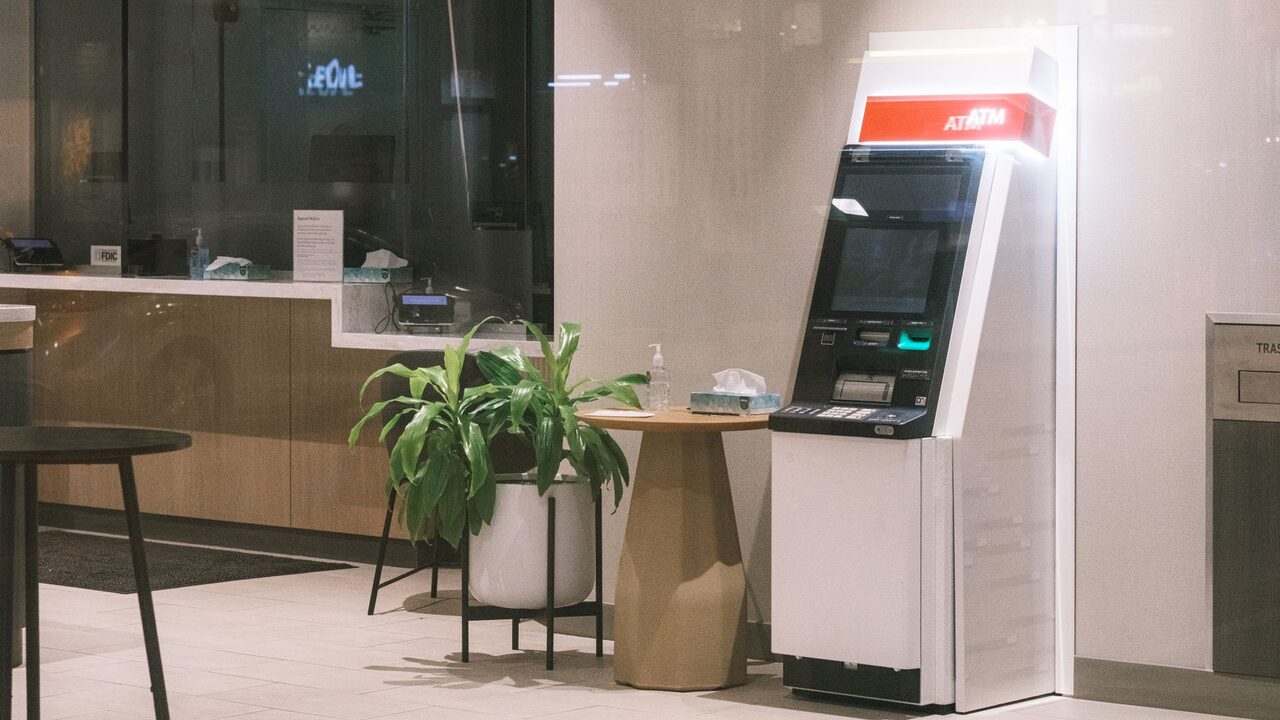
Some ATMs offer a "conversion" before dispensing cash. Choose without conversion, or decline. The ATM owner's withdrawal fee still applies; details are in our article on ATM withdrawal fees with foreign cards.
How to make sure at the counter
- Say "Rupiah, please" before the cashier presses anything. In many restaurants the terminal is brought to the table and the cashier makes the choice.
- On the screen, pick the amount marked IDR.
- Check the receipt before you leave. If it shows "exchange rate", "markup" or an amount in JPY, AUD or KRW, ask for the transaction to be voided and run again in IDR.
- A 3% credit card surcharge is a separate issue from DCC; the rules are in our 3% surcharge article.
The verdict
For Japanese, Australian, Korean and UnionPay cards: choose rupiah on every screen. The only reason to pick your home currency is if you want to know the exact amount right then and are willing to pay a few percent for that certainty. Sources checked 30 October 2026.
FAQ
Do no-foreign-fee cards (Wise, Revolut, Platinum cards) still need to decline DCC?
Yes. The DCC margin is set on the terminal side, not by your bank, so even a fee-free card loses money if you pick your home currency.
The cashier chose the currency without asking. What should I do?
Ask for a void on the spot and pay again in IDR. Once you leave the shop, reversing it through your bank is much harder.
Does paying with QRIS or cash avoid the problem?
Cash in rupiah involves no DCC at all. For QRIS through a foreign app, the rate is set by that app, so compare before you pay.







Comments 0
No comments yet. Be the first to comment!