For slow lorises, the answer is no: every slow loris species (Nycticebus) is protected under Indonesian Environment and Forestry Ministry Regulation P.106/2018, and anyone who keeps or trades one as a photo prop can be prosecuted. Civets (luwak) and reticulated pythons are not on the protected list, so a paid photo with them is not a crime on your part, but it almost always involves a wild animal that is caged, handled all day and kept awake in daylight.
Why slow lorises are different
Slow lorises are nocturnal primates whose eyes are sensitive to light and camera flash. Bali is not part of their natural range, so a loris on a Bali street or beach almost certainly came through the trade from Java or Sumatra. Their bite is venomous, so traders often pull or clip their teeth. The Thai rescue group WFFT records clipped teeth and broken wrists as common injuries in photo-prop lorises.
The legal basis is Law No. 32 of 2024, which amended the 1990 conservation law. Article 21(2) bans capturing, keeping, transporting and trading live protected animals. According to Hukumonline's analysis, offenders face 3 to 15 years in prison and fines in categories IV to VII (Rp200 million to Rp5 billion under the new Criminal Code). Note that Antara's 10 October 2026 report on 22 green turtles rescued by Bali police water unit at Serangan still quoted the old penalty of 5 years and Rp100 million. The figures that apply now are those of Law 32/2024.
Criminal liability falls on the owner or seller. But your money keeps the business going, and if you buy or accept a loris to "rescue" it, you become someone in possession of a protected animal.
Civets and snakes: legal, but think twice
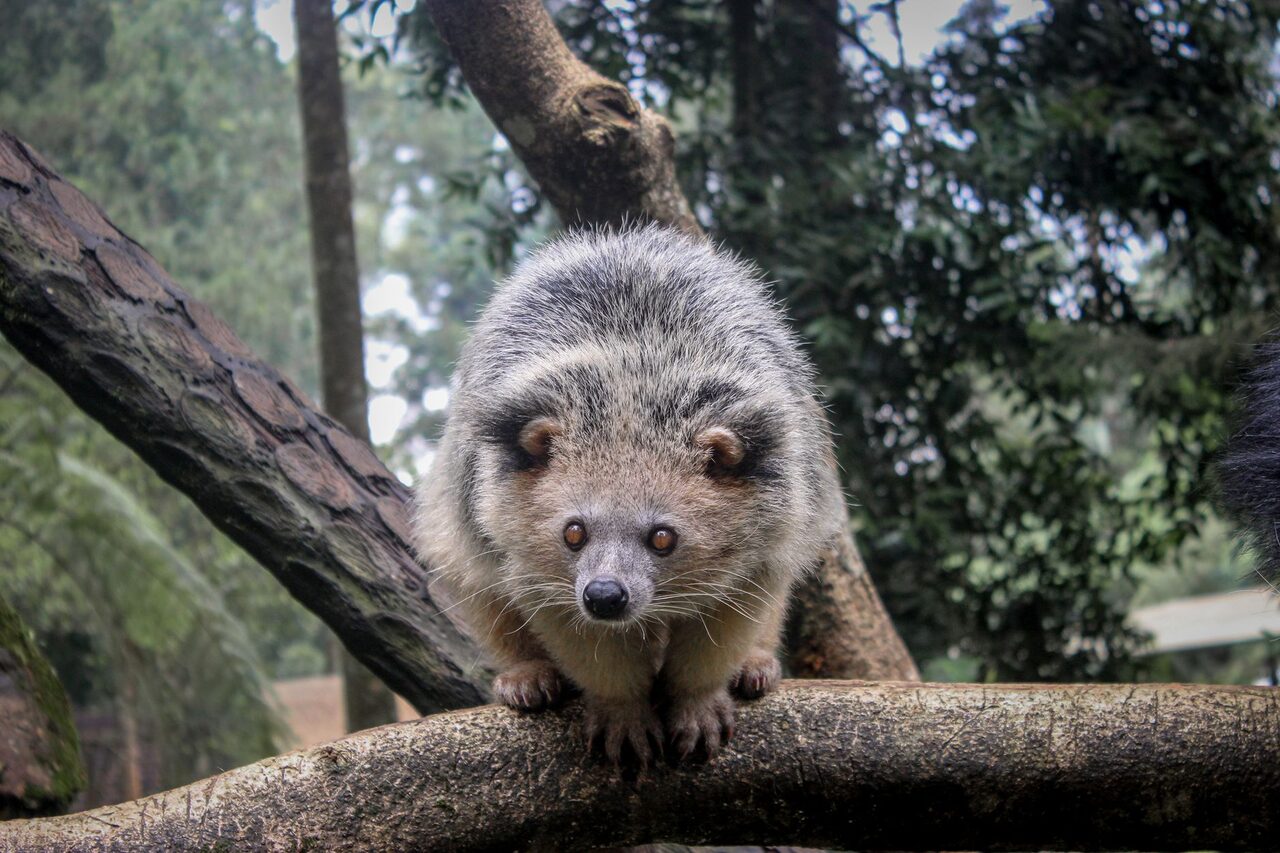
- Civet (Paradoxurus hermaphroditus): not protected. At several tourist coffee plantations, civets are caged and displayed by day although they are nocturnal. We cover the ethics in our ethical wildlife tourism guide for Bali.
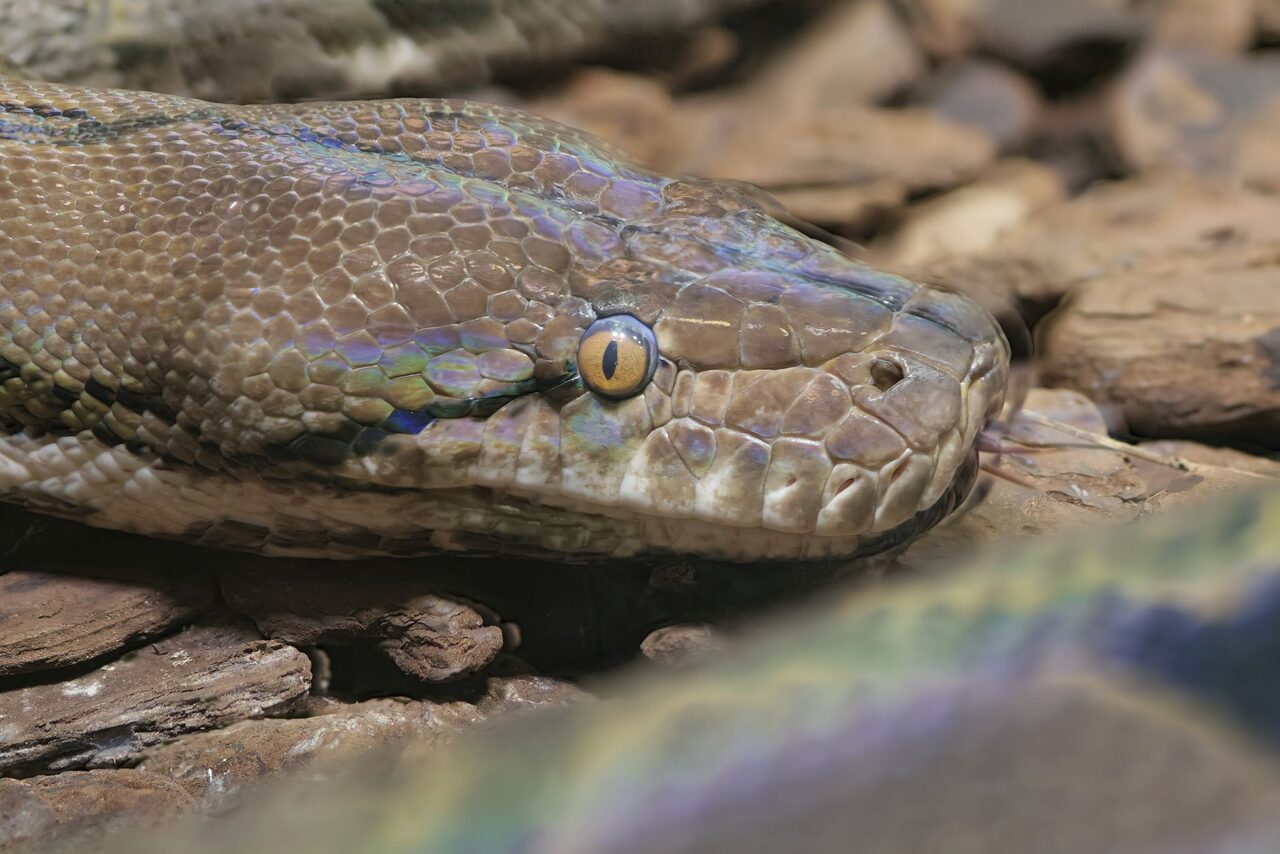
- Reticulated python (Malayopython reticulatus): not protected in Indonesia but listed on CITES Appendix II. A snake draped over a tourist's neck can bite or squeeze when stressed. Some other snakes and reptiles are protected, and tourists usually cannot tell them apart.
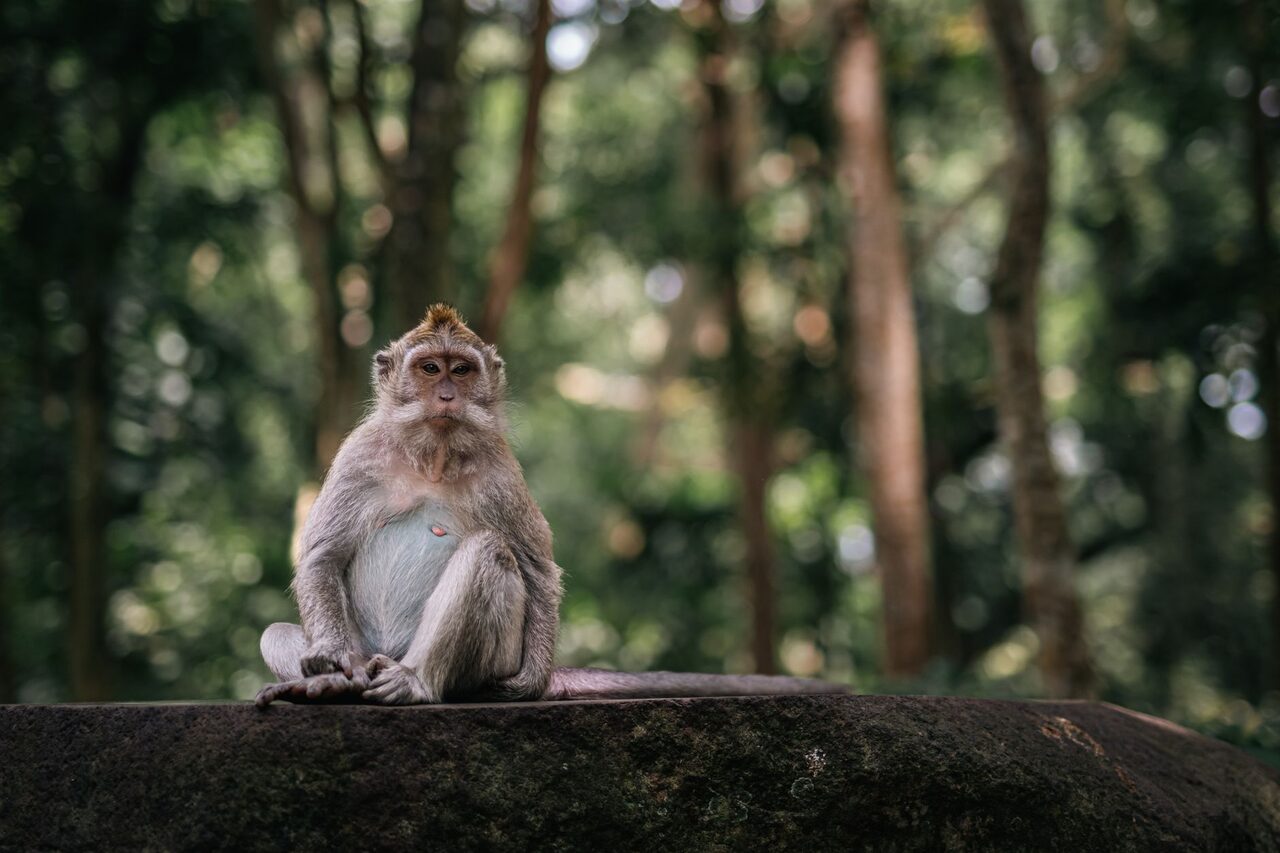
- Long-tailed macaques: since late 2025, Bali Governor's Circular No. 19 of 2025 bans residents from keeping them. According to Antara (15 June 2026), the Bali conservation agency (BKSDA Bali) has received 16 from the public. A chained monkey used for photos now clearly breaches that circular. See also can you feed monkeys in Bali.
If someone offers you a loris photo
- Decline politely and don't photograph the animal, even as "evidence" for social media. Such posts still work as free advertising.
- Note the place, time and what the seller looks like. A distant shot of the scene without confrontation is fine for a report.
- Report it to the Bali Natural Resources Conservation Agency in Denpasar (BKSDA Bali office on Google Maps) or to police on 110. The Bali provincial government also runs a tourist-violation complaint line, 0812-8759-0999, announced with Governor's Circular No. 7 of 2025 (Antara, 24 March 2025).
- Don't buy the animal to free it. That money goes straight into buying the next loris.
The pattern is visible next door. On 27 April 2026, officials in Karon, Phuket, arrested a man offering paid photos with a slow loris, The Thaiger reported on 29 April 2026. For Bali, we found no 2025-2026 news of a loris seized from a photo business in Antara's BKSDA Bali archive (checked 22 October 2026). That does not mean it never happens, only that it has not been reported.
FAQ
Can a tourist be deported over wildlife?
Immigration can impose administrative action, including deportation, on foreigners who break Indonesian law. Possessing or transporting a protected animal is a criminal offense, so the risk is real if you buy or carry one.
What about photos with owls or fruit bats at Tanah Lot?
Status differs by species, and some birds of prey are protected. The safest stance is the same: don't pay and don't handle wild animals. More rules are on our Bali rules page.
Are wildlife souvenirs a problem too?
Yes, for protected animals such as turtles. See the turtle products rule in Bali.
If you want to see Bali's wildlife up close, choose places where visitors don't handle the animals, such as the turtle conservation center on Serangan or birdwatching in West Bali National Park with a licensed guide.




Comments 0
No comments yet. Be the first to comment!