Yes, in most cases. Balinese ceremonies, cremations (ngaben) included, mostly take place in the open, and no national law bans tourists from photographing them. What decides it is the rule of the local customary village (desa adat), the instructions of the pecalang (village security), and the permission of the family holding the ceremony. Rules below were checked in October 2026.
Is there an official regulation on photographing ceremonies?
No article deals with cameras specifically. Bali Governor Circular No. 7 of 2025 on conduct for foreign tourists (announced 24 March 2025) requires visitors to respect the sanctity of temples, sacred objects and religious symbols, and to respect custom during ceremonial processions. The same circular bans foreign visitors from entering the main and middle courtyards of a temple unless they are there to pray, from climbing sacred trees, and from behaviour that defiles holy sites. Breaches can lead to sanctions or legal action under Indonesian law.
At village level, Bali Provincial Regulation No. 4 of 2019 on Customary Villages recognises each village's awig-awig and perarem (customary rules) as binding within its territory. So a photo or drone ban in one village can be perfectly valid even if the next village allows it.
Has anyone been punished over a photo at a holy site?
Yes. On 1 May 2022 a Russian woman posed naked at a sacred tree in the grounds of Pura Babakan, Desa Tua, Tabanan. The photo went viral, and she and her husband were deported through Ngurah Rai Airport on 6 May 2022 under Article 75(1) of Immigration Law No. 6 of 2011. The issue was the pose and the place, not the camera.
Can I photograph a ngaben cremation?
The procession through the streets, the carrying of the bade (cremation tower) and the burning at the village cemetery (setra) can generally be watched and photographed from the sidelines. Royal cremations (pelebon) in Ubud are among the ceremonies that regularly draw large numbers of tourists. For an ordinary family cremation, ask the family or the banjar head (kelian) before shooting up close. The limits locals generally expect:
- Do not photograph the body up close or zoom in on grieving relatives.
- Do not block the path of the bade, and do not climb walls, trees or roofs for an angle.
- Follow the pecalang. If they ask you to step back or stop shooting, stop immediately.
- Wear a sarong and sash even if you are only watching at the cemetery.
What about photos inside a temple during an odalan festival?
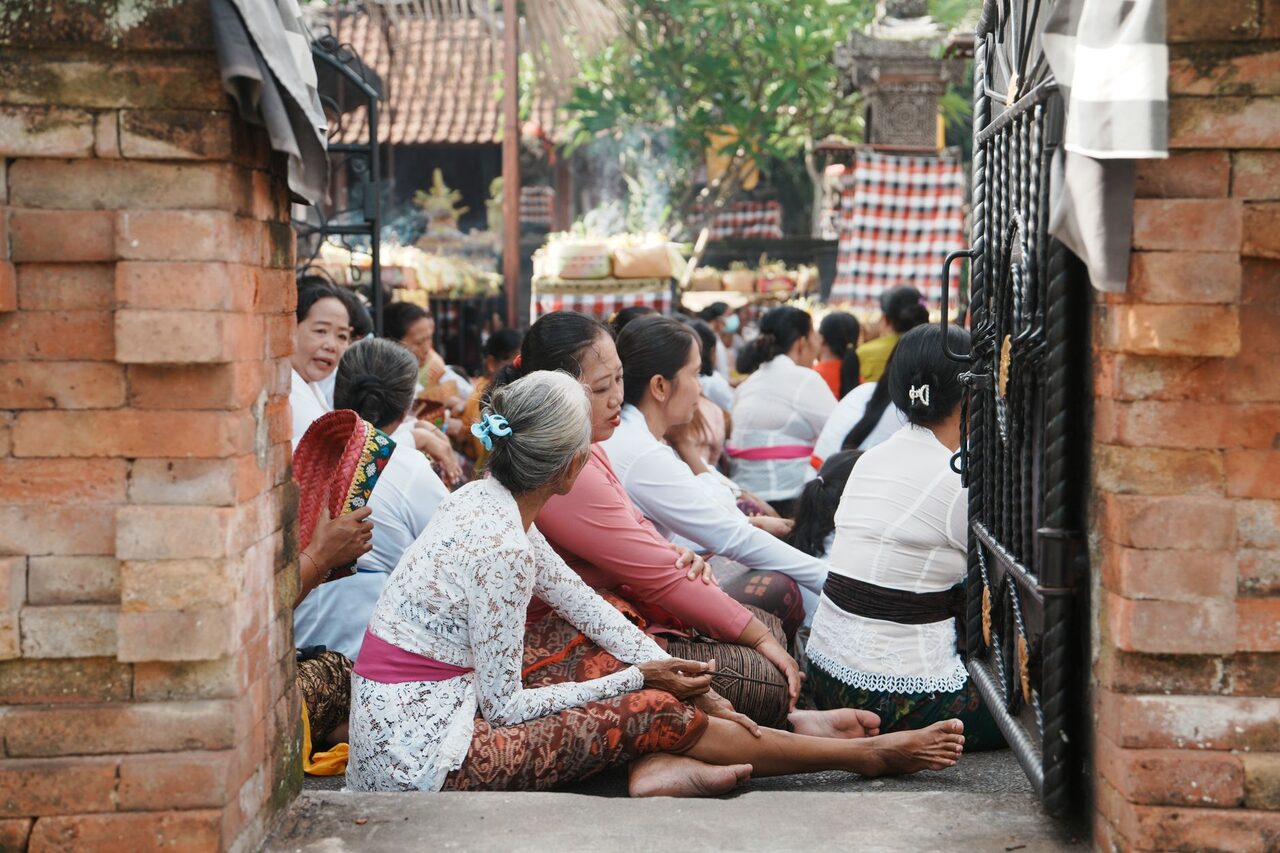
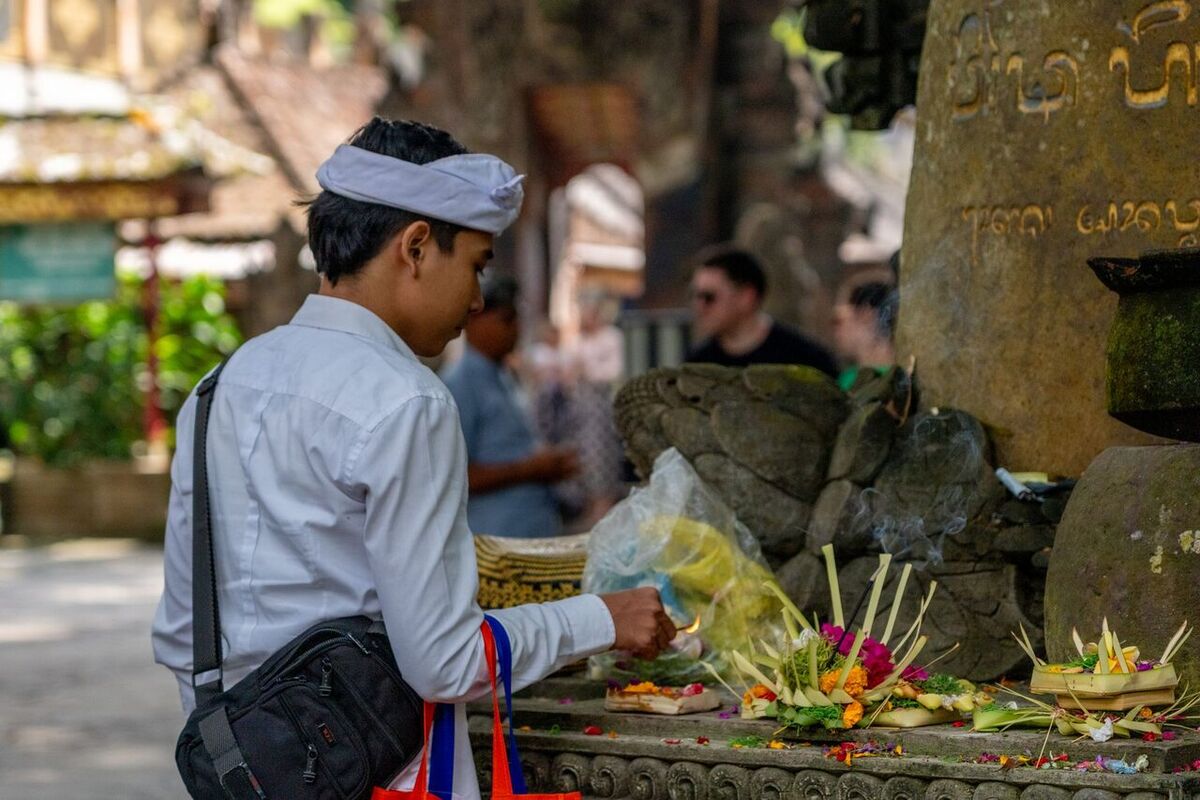
Under Circular 7/2025 the inner courtyards are closed to tourists who are not praying. From the outer courtyard (jaba) you can usually still take pictures. Do not shoot worshippers at close range, do not stand right in front of them, and never stand higher than the priest (pemangku or pedanda) leading the rites. Some temples also post no-photo signs for certain areas; those signs apply even when nobody is guarding them.
Is flash allowed?
There is no written rule, but a flash fired in the face of someone praying is considered disruptive. Turn off the flash and the shutter sound. A modern phone camera copes fine with oil lamps and incense smoke.
Can I fly a drone over a ceremony?
Better not. A drone hovering above a shrine is considered disrespectful because it sits higher than the sacred structure, and its noise disturbs prayer. Some villages ban drones across their whole territory. Penglipuran village in Bangli has banned drones since February 2024, with exceptions only for official purposes approved by the village management. National registration and no-fly zones are covered in our Bali drone rules for 2026.
Can I post ceremony photos on social media?
Legally there is no general ban. The etiquette: do not post photos of the body or of recognisable grieving faces, do not add joking captions, and do not use a ceremony as the backdrop for a styled photo shoot. The Pura Babakan case shows that one post can trigger complaints from residents and an immigration investigation.
Quick summary: safe or not
- Photos from the outer temple courtyard or the roadside during a procession: generally fine.
- Close-ups of worshippers, the body or grieving family: ask first.
- Entering the inner temple for photos: not allowed for tourists who are not praying.
- Drones over temples or processions: avoid; banned in villages such as Penglipuran.
- Flash: switch it off.
For dress code and basic manners at temples, read temple etiquette in Bali. How to find ngaben, odalan and melasti dates that are open to onlookers is explained in our guide to watching Balinese ceremonies.


Bình luận 0
Chưa có bình luận nào. Hãy là người đầu tiên bình luận!