Yes. To enter a temple in Bali you need a sarong (kamen) that covers your legs to below the knee, plus a sash (senteng) tied around your waist. This applies to men and women, and it still applies if you are already wearing long trousers. The good news: the big temples that see a lot of visitors usually lend the cloth at the entrance, so you do not have to buy anything beforehand.
The rule comes from two places. One is the customary law of each village that looks after a temple. The other is Bali Governor Circular No. 4 of 2023 on the New Order for Foreign Tourists, which requires visitors to dress modestly at holy sites and bars them from the main inner courtyard unless they are there to pray in Balinese ceremonial dress.
What you should wear
- Kamen or sarong: wrapped around the waist, reaching the calves or ankles. Do not roll it up above the knee to stay cool.
- Sash (senteng): tied at the waist over the sarong. It is not a neck scarf. Plenty of visitors drape it over their shoulders, but its job is to act as a belt.
- A top that covers your shoulders: a T-shirt with sleeves or a shirt. Tank tops, crop tops and open backs should be covered with an extra cloth.
- Shorts or short skirts: still need to be covered by the sarong, even if they reach the knee.
- Footwear: sandals are usually fine in the outer courtyard. If staff ask you to remove them in a certain section, just do it.
Free loan or paid? The four temples people ask about most
Figures below were checked in October 2026 from the sources available. Fees can change without notice, so carry extra cash.
- Pura Luhur Uluwatu: sarongs and sashes are lent at the ticket gate, and various guides say the cloth is included in the entry ticket. Foreign visitor ticket prices differ between sources, roughly Rp50,000-100,000. The kecak dance ticket is sold separately. Keep sunglasses, hats and phones in your bag, as the cliff-top monkeys often grab belongings.
- Pura Besakih: when new fees were announced in 2023, the Rp60,000 foreign visitor ticket was said to include the kamen and a local guide escort, while the electric shuttle from the car park was charged separately (Rp30,000 per person per trip under the 2023 announcement). Indonesia.travel now lists Rp60,000-100,000 including sarong and sash.
- Pura Tirta Empul (Tampaksiring): tirtaempultemple.com, which describes itself as the official site, lists Rp75,000 for adults and Rp50,000 for children aged 5-12 from 1 January 2025, open 08:00-18:00. The standard ticket does not include entering the purification pools. Sarongs for walking around are provided at the entrance; for the melukat bathing ritual you need a separate cloth that can get wet.
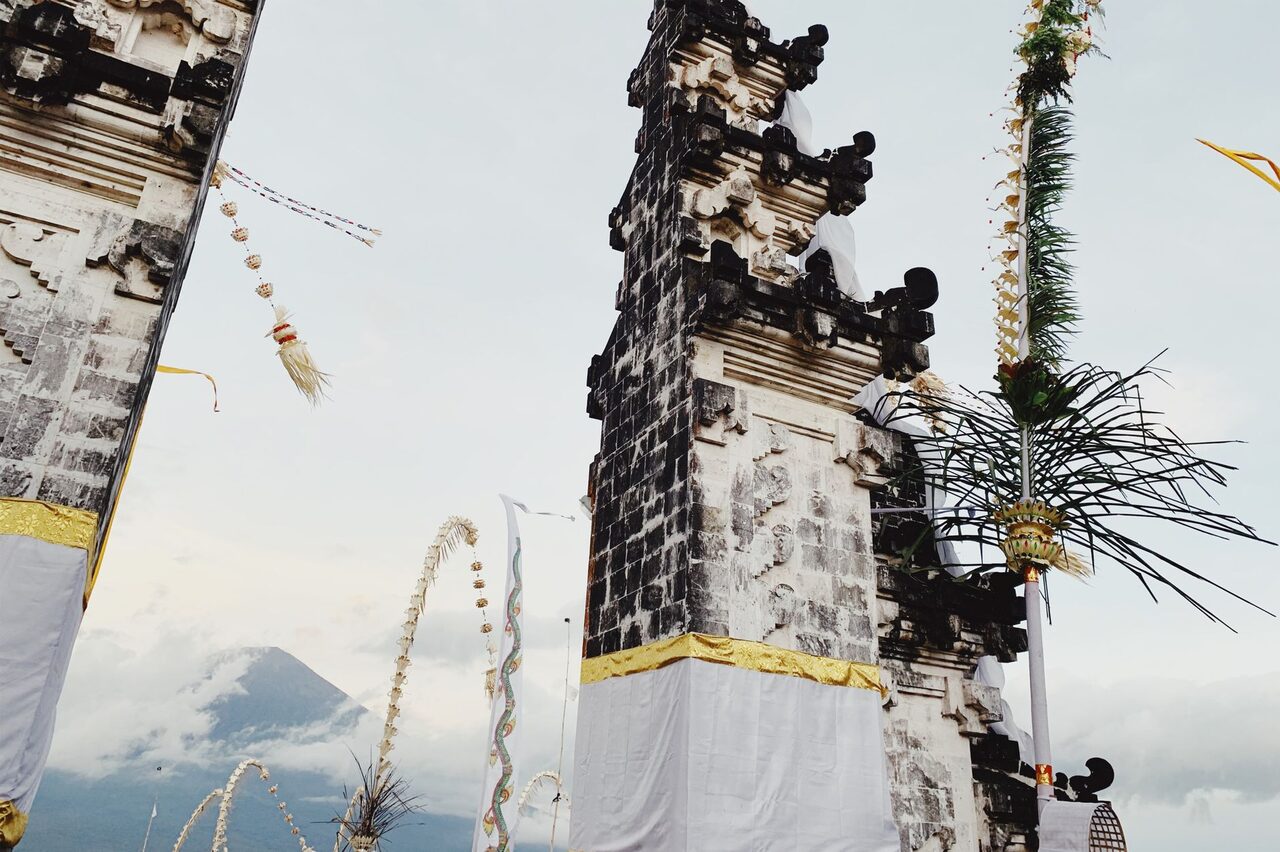
- Pura Lempuyang (Gates of Heaven): according to a local transport operator, the foreign visitor fee of Rp55,000 has applied since March 2024 under Karangasem Regional Regulation No. 8 of 2023, sarong included. The shuttle from the lower car park is reported at Rp50,000 return. The temple closes to visitors during its pujawali festival, for example 23-27 April 2025.
Small village temples that rarely see tourists often have no loan cloth at all. If you plan to stop at several temples, bringing your own is far more practical.
Bringing your own sarong: when it makes sense
- Loan cloths are shared and can be damp by midday. Many visitors bring their own for hygiene reasons.
- An ordinary patterned beach sarong is generally accepted for visitors. Around 1 x 1.8 metres is enough to wrap.
- Kamen and sashes are sold at art markets such as Ubud Market and Sukawati. Prices vary a lot, so bargain politely.
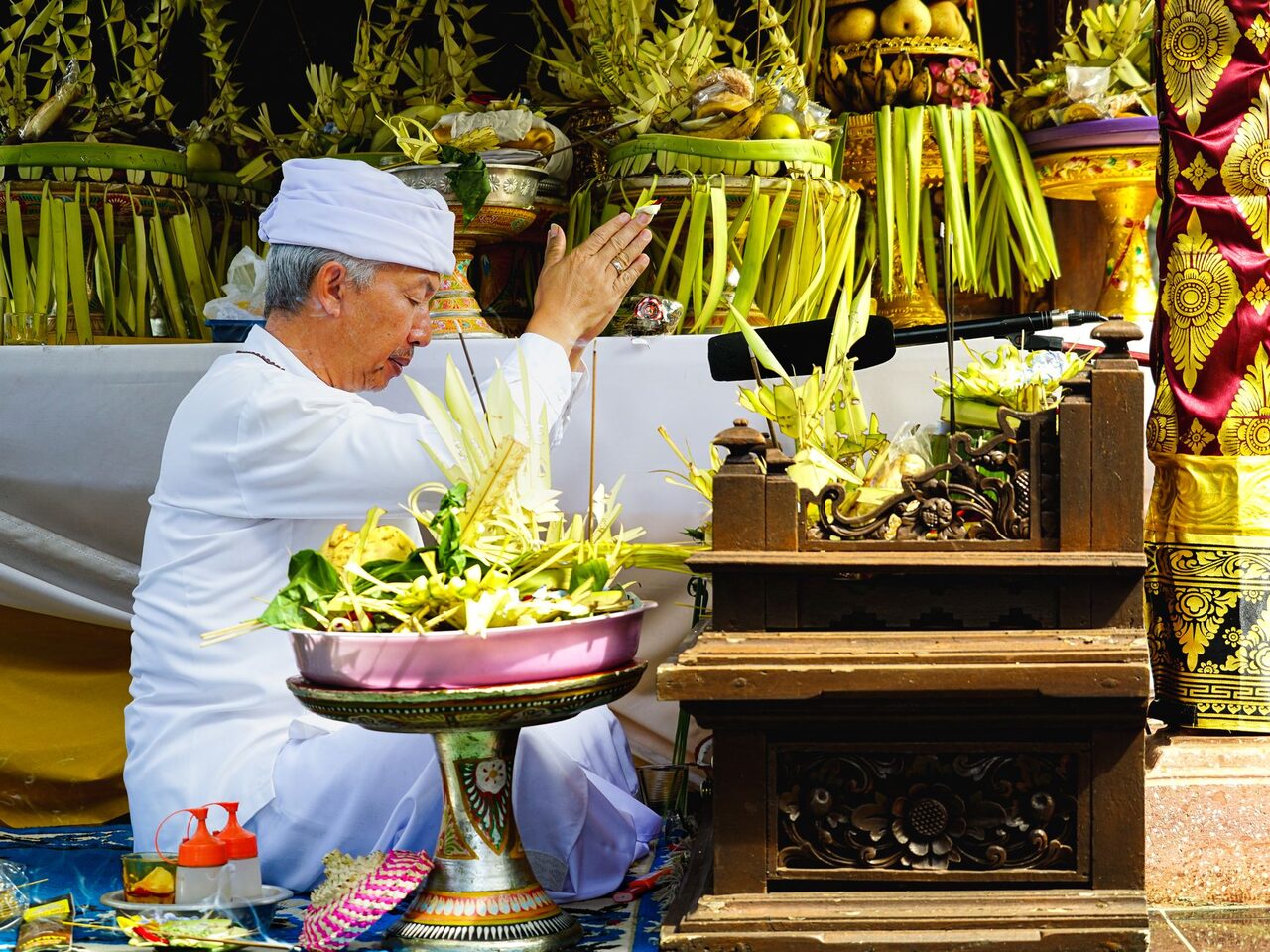
- If you join a ceremony or pray with a Balinese family, ask them to help you dress in full ceremonial clothing, since the rules for praying are stricter than just a sarong.
Parts of the temple visitors cannot enter
Balinese temples are usually split into three courtyards: nista mandala (outer), madya mandala (middle) and utama mandala or jeroan (innermost and most sacred). Under Governor Circular 4/2023, tourists may not enter the utama mandala unless praying in Balinese dress. In practice:
- At Uluwatu, the shrine on the cliff top is closed to visitors; you walk the cliff paths and outer grounds.
- At Besakih, the innermost courtyards of several temples in the complex are for worshippers only.
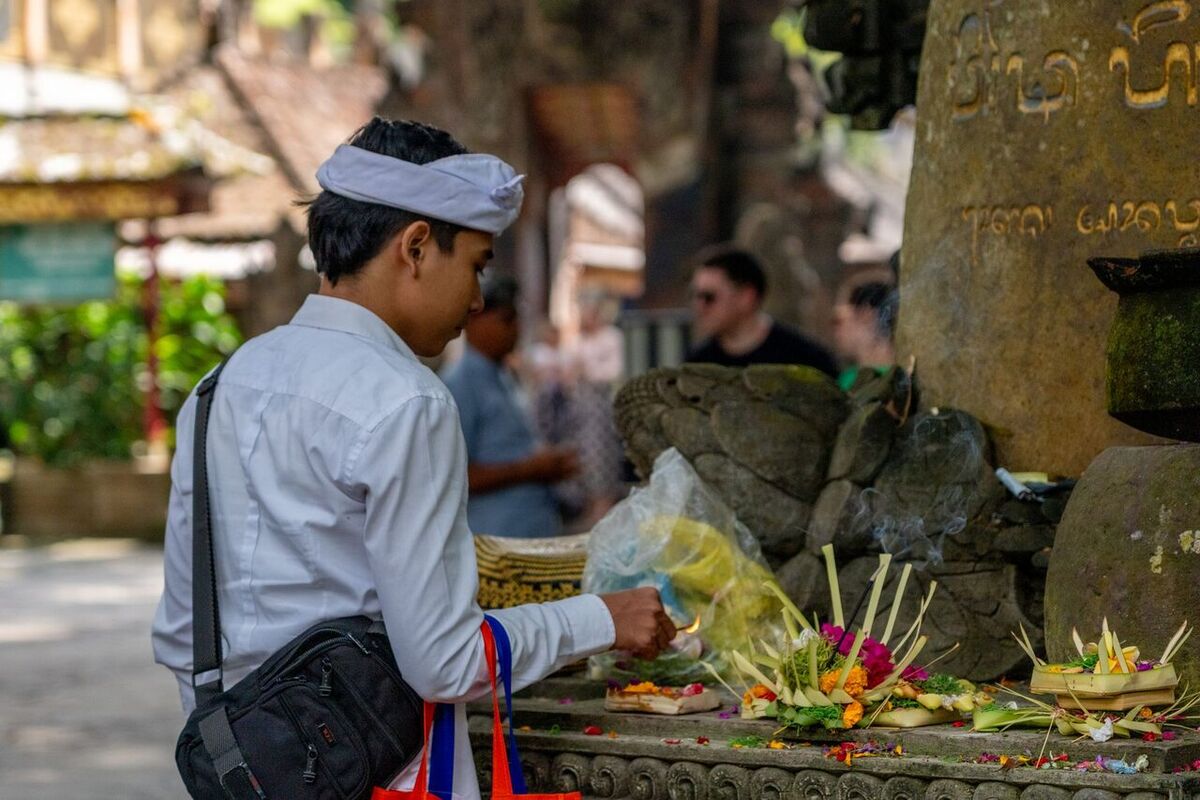
- Everywhere, do not climb walls, shrines or split gates for photos, do not sit on sacred structures, and do not step over offerings (canang) on the ground.
- During ceremonies, areas can close at short notice. Follow the pecalang (customary village guards).
The question of women on their period has its own article: Can Women on Their Period Enter Temples in Bali?. For other etiquette, such as behaviour during ceremonies and taking photos, see temple etiquette in Bali.
The most common mistakes
- Bringing a sarong but forgetting the sash. At stricter temples staff will ask you to wear both.
- Returning a loan cloth at the wrong gate. Hand it back where you borrowed it, as it belongs to the village.
- Arriving during a pujawali without checking. Major temples can close to visitors for several days; check local news or ask your hotel the day before.
One small habit that helps: keep a thin sarong in your day bag from the morning. Many lovely temples in Bali turn up unplanned by the roadside, and with a cloth in your bag you can walk straight in without hunting for a loan.




Bình luận 0
Chưa có bình luận nào. Hãy là người đầu tiên bình luận!