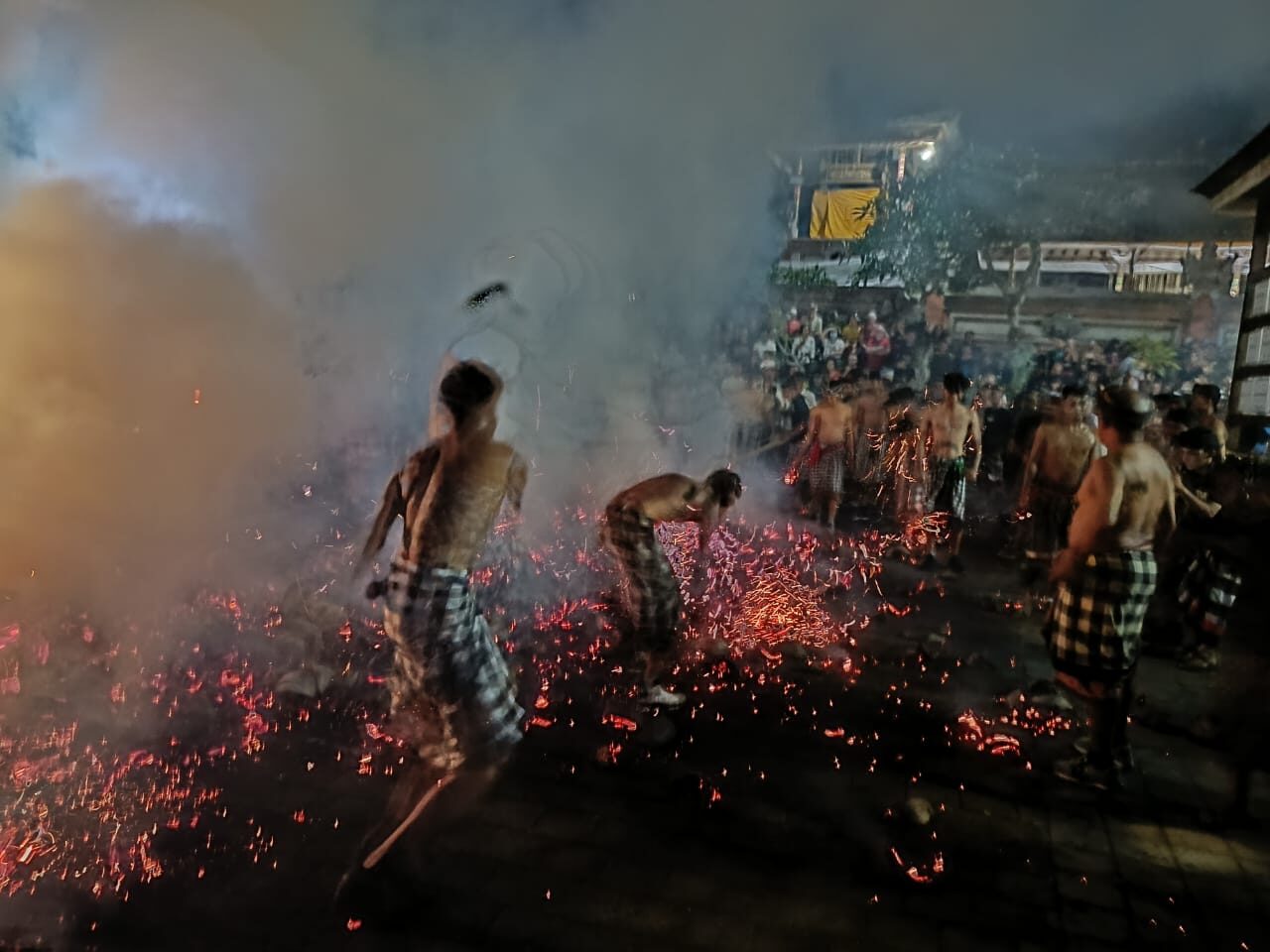
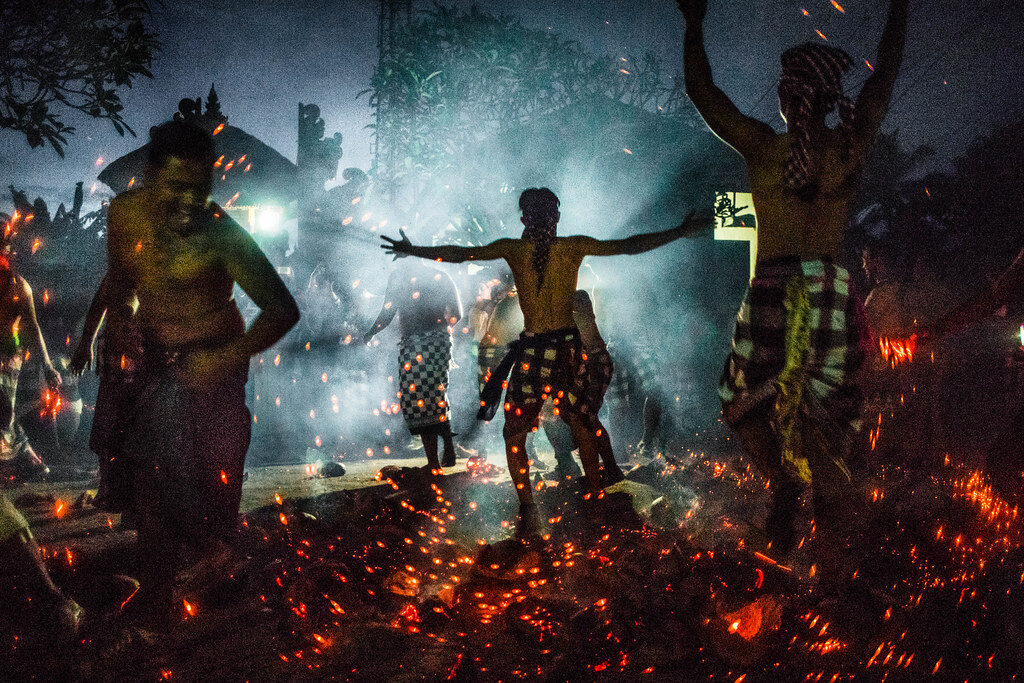
On the night before Nyepi most of Bali is busy parading ogoh-ogoh. In Banjar Nagi, Petulu village, Ubud district, residents instead pile up coconut husks and shells, burn them to glowing embers, and hurl those embers at one another. The ritual is called Siat Geni or Mesabatan Api, and it happens only once a year.
What happens in the banjar courtyard
- Villagers, not performers — the youth group Sekaa Teruna Teruni (STT) Mekarjaya. A Kompas report counted around 175 bare-chested participants wearing only udeng, kamen and the black-and-white saput poleng.
- Coconut is the fuel. Husks and shells are arranged in a ring and lit. Participants sit around the pile singing gegenjekan until the fire is fully ripe.
- The signal comes from Jro Bendesa. At his cue the embers are kicked and thrown between participants while a baleganjur gamelan hammers out a furious tempo. Some sources describe three rounds.
- The meaning is dissolution. Fire burns away the Bhuta Kala within and wards off misfortune before the village enters the silence of Nyepi. Nobody wins; blisters are shrugged off and no grudges are kept.
When it is held, and a note about dates
Unlike Siat Yeh in Jimbaran, which falls the day after Nyepi, Siat Geni in Nagi is held on Pengerupukan night, the day before Nyepi, starting around 6.30pm as dusk turns to dark. The most clearly documented edition was Pengerupukan on Sunday 10 March 2024. Balinese calendars place Nyepi 2027 on Monday 8 March 2027, which would put Pengerupukan on Sunday 7 March 2027 — though other sources list Nyepi as 9 March. The final schedule is set by the customary village, so confirm a few days ahead.
Etiquette and safety for onlookers
- This is a rite, not a ticketed show. Come through a local guide, your hotel staff, or with permission from the banjar elders, and stand outside the ring of fire as the pecalang direct you.
- Wear a kamen and sash. Avoid synthetic fabrics that catch easily and open sandals.
- Photography is generally tolerated from a safe distance, but do not fire a flash into participants' faces, never step into the arena, and stop during the prayers.
- Arrive early: the lanes into Nagi are narrow and often closed for the ogoh-ogoh parade. Remember that the whole island shuts down the next day.
Info Praktis & Reservasi
- Location: Banjar Nagi, Petulu, Ubud, Gianyar — about 2.5 km or 10–15 minutes from Ubud Palace via Jalan Raya Andong. View on Google Maps
- How to attend: there is no ticket booth. Ask a guide or the banjar committee; the customary village once prepared a package for watching Mesabatan Api, but no price was ever published.
- Hours & cost: starts around dusk (roughly 6.30pm) and runs 30–60 minutes. Free; voluntary donation.
- Latest updates: search on Instagram
Staying near Ubud for Pengerupukan night? Check AccessiaPass hotel vouchers so you are only a short walk from the embers.






Mga Komento 0
Wala pang komento. Maging una sa pagkomento!