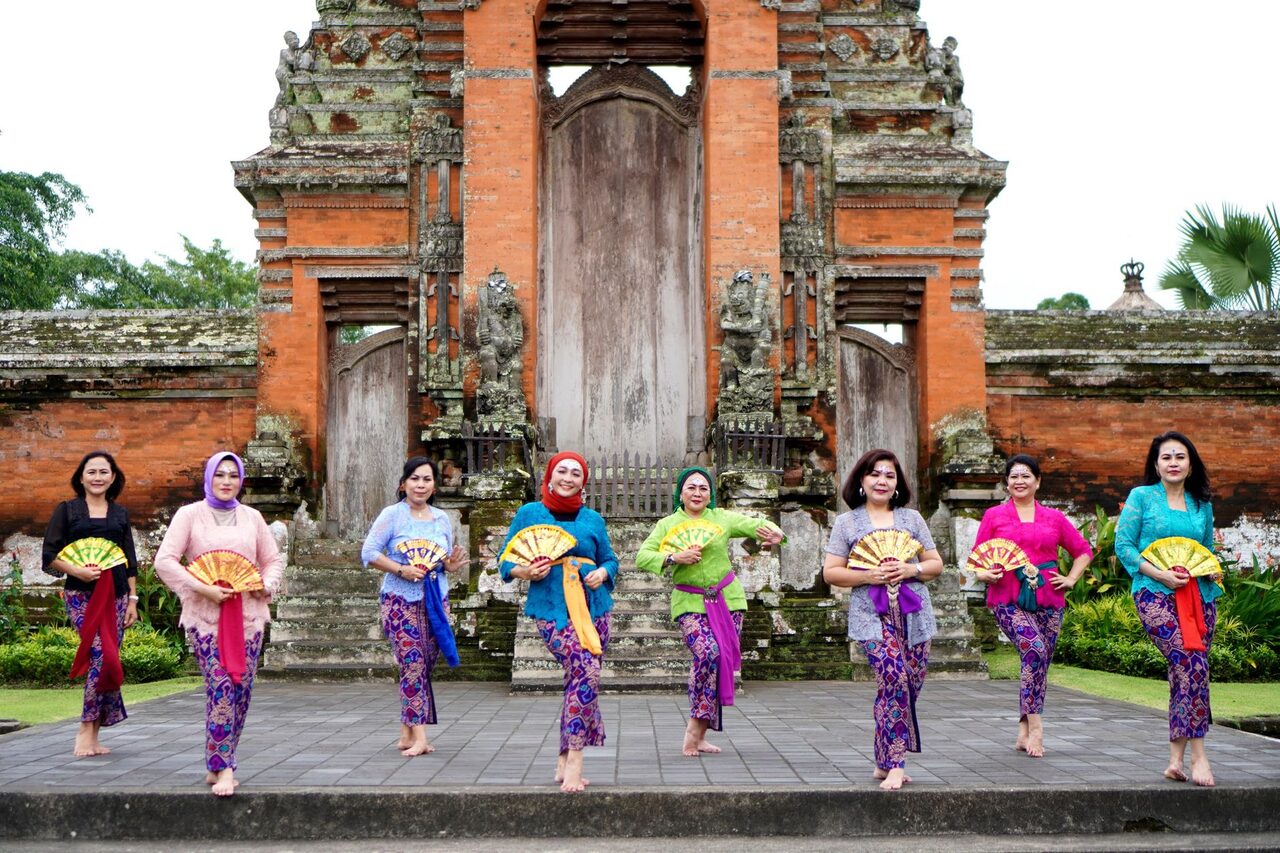
Yes. Foreign visitors are free to wear a kebaya, kamen, sash, or udeng in Bali, and Balinese people generally appreciate guests who put on traditional dress neatly. What matters is context: Balinese adat dress is worship and ceremony clothing, so how, where, and why you wear it counts for more than who is wearing it.
Is there any rule that bans tourists from wearing Balinese dress?
No. Bali Governor's Circular No. 7 of 2025 on conduct for foreign tourists actually asks visitors to dress modestly and appropriately at holy sites, attractions, and public places. The same circular says foreign tourists may not enter the utamaning mandala and madyaning mandala (the inner and middle courtyards of a temple) except to pray while wearing Balinese traditional dress. Women who are menstruating may not enter those areas either.
In other words, traditional dress becomes a requirement if a Balinese family or guide invites you to pray. Who may join prayers is covered in can non-Hindu tourists pray at a Balinese temple.
When is traditional dress or a sarong required?
- Visiting a temple: a kamen (sarong) and a sash tied at the waist, shoulders covered. This applies at almost every temple; the full rules are in the temple dress code.
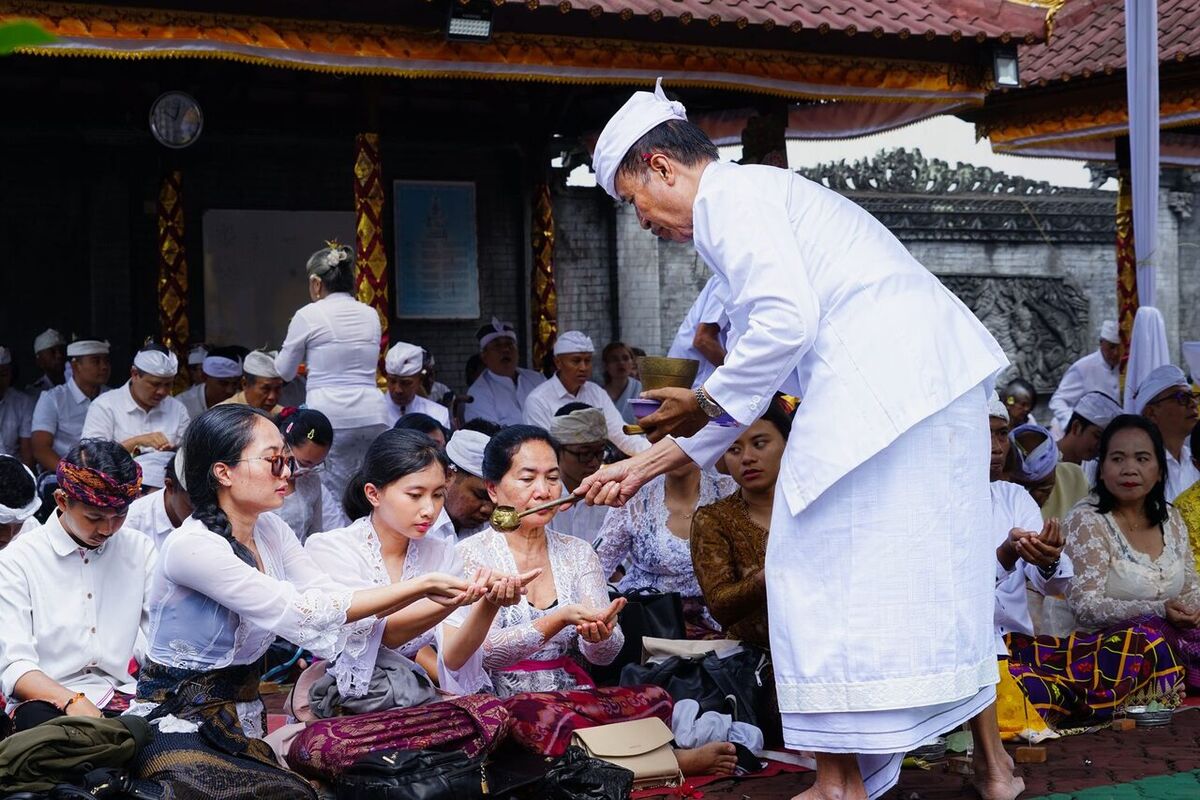
- Praying in the inner courtyard: full adat dress. Women wear a kebaya, kamen, and sash; men wear an udeng, a shirt (usually white), kamen, saput (overwrap), and sash.
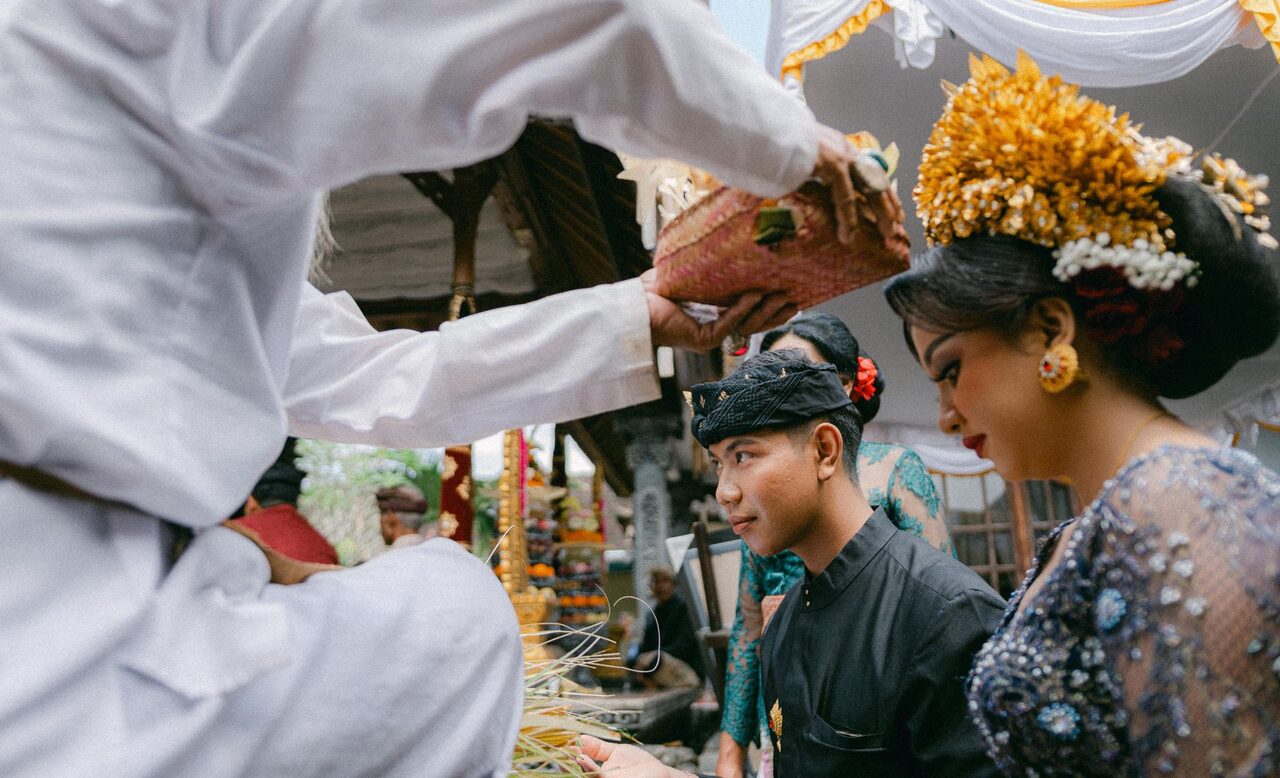
- Invited to a family ceremony (odalan, wedding, tooth filing): hosts usually expect guests in traditional dress. Ask about the colour first, since each ceremony has its own custom.
What about "traditional dress Thursday"?
Bali Governor Regulation No. 79 of 2018 sets the days for wearing Balinese dress: every Thursday, plus Purnama (full moon), Tilem (new moon), and Bali Province Day on 14 August. It applies to staff of government and private institutions during working hours, not to tourists. So if you see bank tellers, teachers, or hotel staff in kebaya and udeng on a Thursday, that is why. You are not obliged to join in, but wearing a kamen and sash that day usually earns a smile.
When is wearing Balinese dress considered inappropriate?
- For provocative content. A see-through kebaya with nothing underneath, a kamen deliberately hitched up, or sensual poses at a temple gate will be seen as disrespectful. Bali immigration has deported foreigners several times over indecent photos at holy sites, and traditional dress does not make such photos acceptable.
- Imitating a priest. An all-white outfit with an udeng beblatukan (knot at the back) is the look of a pemangku, a temple priest. White clothes for prayer are fine, but do not dress up as a ceremony leader for photos.
- Wearing the udeng carelessly. Tourists may wear an udeng, but the colours carry meaning. White is for temple ceremonies, black for funerals, batik for social and community events. A batik udeng is the safe choice for sightseeing or photos; a black one at a party is plainly out of place.
- Sitting on shrines (pelinggih) or climbing sacred structures for a photo, whatever you are wearing.
How much does kebaya rental or a Balinese costume photoshoot cost?
Costume photo packages are most common in Ubud, Singapadu (Gianyar), and Denpasar. A real example: a Balinese costume photo studio in South Denpasar listed on Airbnb charges Rp300,000 per child (under 10) and Rp400,000 per adult for a 1.5-hour session (about US$19-25). That includes the costume, hair and makeup, four 10x15 cm prints, and 50+ unedited files. Ubud packages that add a shoot in rice fields or at a temple usually cost more because of transport and an on-location photographer.
If you only need cloth for a temple, there is no need to rent. A simple kamen or sarong at a market sells for roughly Rp20,000-80,000 before bargaining, and many major temples lend sarongs at the entrance.
One practical tip: ask whether the package uses a modern brocade kebaya or a traditional one. For photos at a temple during a ceremony, a plain white or pastel kebaya is far more respectful than a sequinned bridal kebaya.
How do you wear a kamen and sash correctly?
- Women's kamen wraps from right to left, with the end falling on the left side, ankle length.
- Men's kamen wraps from left to right with a front fold (kancut) whose tip touches the ground, then a saput is tied over it at knee height.
- The sash is tied around the waist, not draped over the shoulders like a scarf. Tying it at the waist symbolises self-control.
- The udeng sits with its knot at the centre of the forehead and the right fold slightly higher than the left.
Rental studios usually dress you. If you buy your own, ask the seller to show you how to wrap it; most are happy to.
What is the etiquette at a ceremony in traditional dress?
Arrive on time, sit at the back or where you are shown, never stand higher than the priest, and do not step over offerings (canang) on the ground. Turn off your camera flash. If you are unsure about taking photos, ask the host; this is covered in how to watch a Balinese ceremony. Other rules for visitors are summarised on the Bali rules page.
FAQ
Can tourists wear a kebaya to a restaurant or mall? Yes. There is no ban, and on Thursdays you will see plenty of locals in kebaya. Just keep the hem off wet floors.
Can a male tourist wear an udeng without the full outfit? Yes, for casual outings or photos, as long as it is a batik udeng. To enter a temple's inner area for prayer, wear full traditional dress.
Can traditional dress be worn during menstruation? Outside temples, yes. But Governor's Circular 7/2025 bars menstruating women from a temple's inner and middle courtyards, whatever they wear.
Sources: Bali Governor's Circular No. 7/2025 (Antara Bali and Kumparan), Bali Governor Regulation No. 79/2018 via KPPN Amlapura (Ministry of Finance), NOW! Bali on udeng types, Balinese costume studio listing on Airbnb, Bali Villa Hub on sarong prices (checked 28 November 2026).


Comments 0
No comments yet. Be the first to comment!