Yes. On matters of public order inside a customary village, you should follow a pecalang's instructions: when a road is closed for a ceremony, during Nyepi, or when you are asked to wear a sarong at a temple. But pecalang are not police, so they have no power to take your passport, detain you, or collect an on-the-spot "fine" without a ticket.
That distinction matters because most run-ins between tourists and pecalang are not legal problems at all. They are misunderstandings on the road. Here are the answers one by one.
Who are pecalang, and what is their legal basis?
Pecalang are a traditional security unit formed by each desa adat (customary village). Bali Provincial Regulation (Perda) No. 4 of 2019 on Customary Villages defines them in Article 1 point 20, and Article 47(1) sets their duty: security, peace, and public order within the village's territory. They are appointed and dismissed by decision of the village's prajuru (customary council), and their code of conduct, the Sasana Pacalang, is issued by the provincial Customary Village Assembly (MDA).
Since 2020 Bali has also run Sipandu Beradat, an integrated village-based security system set up by Governor Regulation No. 26 of 2020. At village level, pecalang work alongside civil protection volunteers (linmas) and the Bhabinkamtibmas, the police officer assigned to each village. On the street they are easy to spot: an udeng headcloth, a black-and-white checked cloth (saput poleng), often a handheld radio.
Are foreign tourists bound by customary village rules?
Yes, as far as public order and the environment go. The same regulation calls people who are not village members but are present in its territory tamiu, and Article 1 point 29 states that awig-awig (customary village rules) also apply to tamiu. Under Article 9, a tamiu's obligations are limited to pawongan (social relations) and palemahan (the environment). You are not required to take part in rituals, but you are expected to respect closed roads, sacred areas, and village quiet.
The next layer comes from the province. Bali Governor Circular No. 7 of 2025, launched on 24 March 2025, requires foreign tourists to dress modestly at holy sites and in public places, and bars them from entering the main and middle courtyards of a temple unless they are there to pray.
What can pecalang do to tourists?
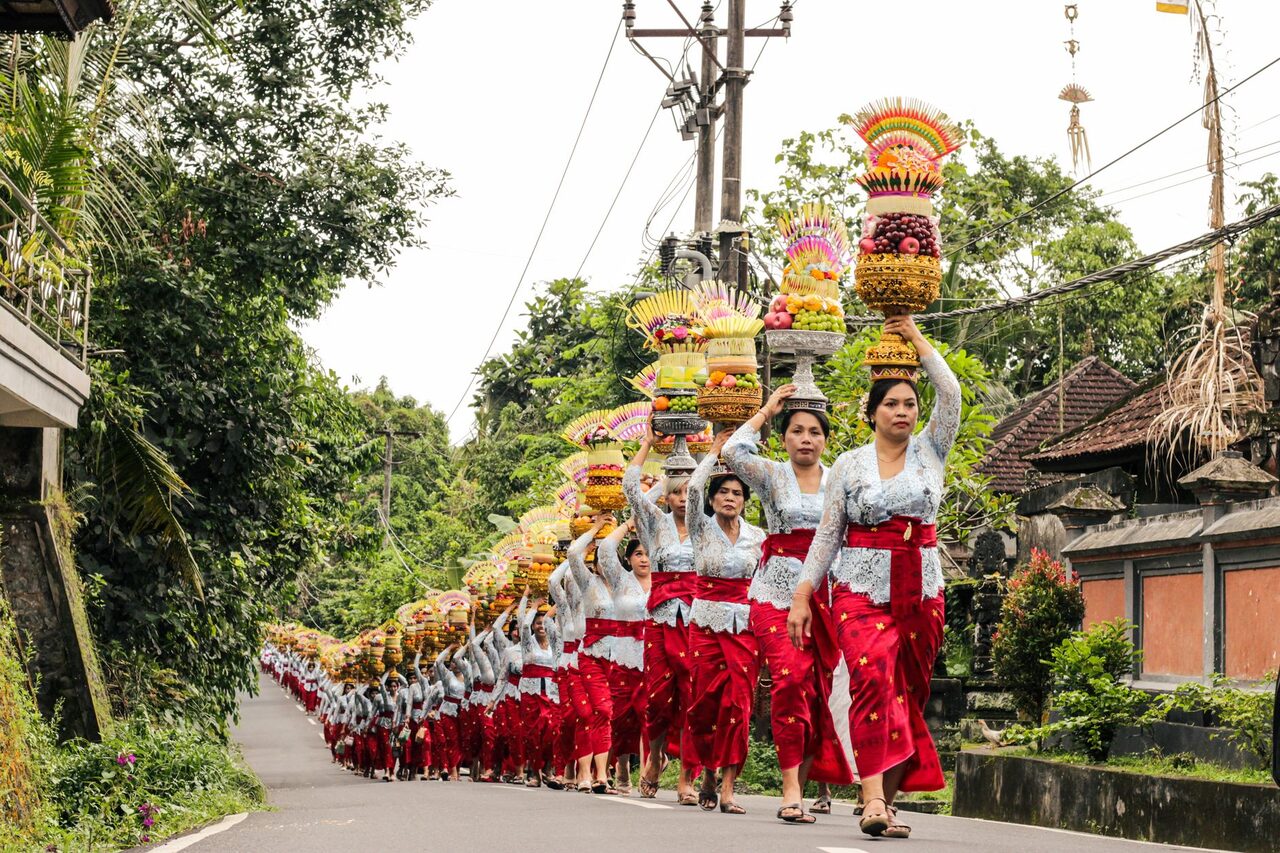
- Close or divert roads during melasti, cremations, temple anniversaries, or ogoh-ogoh parades, and ask you to wait or turn around.
- Send you back to your accommodation on Nyepi, and hand you to the police if you refuse. On Nyepi, 19 March 2026, pecalang from Sukawati customary village and Sukawati police picked up an American man walking along Jalan Raya Sukawati at about 07.15 local time. He was taken to the police station, then found a villa where he waited until Nyepi ended.
- Manage parking and beach access run by the customary village.
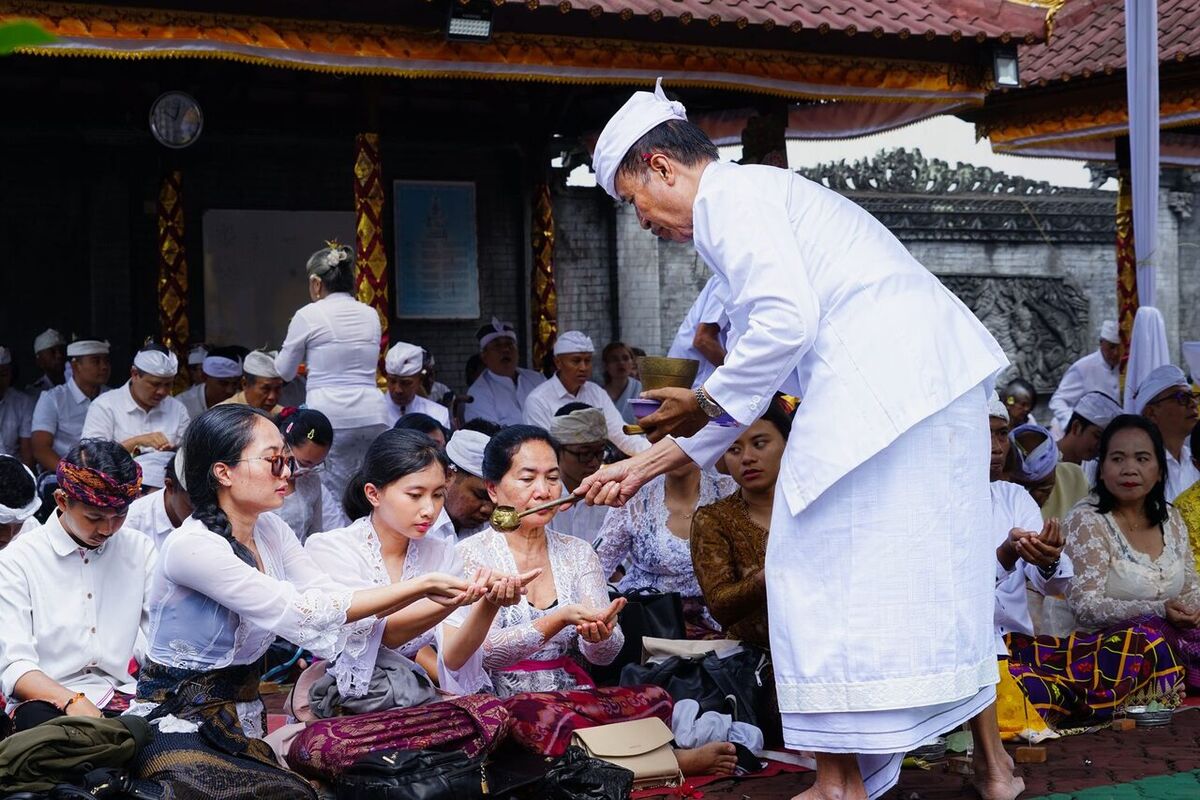
- Correct your clothing or behaviour at a temple, ask you to wear a kamen and sash, or ask you to leave areas closed to visitors.
- Ask you to stop filming during sacred parts of a ceremony.
What are they not allowed to do?
Pecalang do not have police powers. They may not confiscate your passport or phone, lock you up, hit you, or impose a fine on the spot. Article 47(3) only gives them a role in assisting state security officers after coordinating with the village council. If a state law may have been broken, the route is to hand you over to the nearest police station, as happened in Sukawati.
Customary sanctions are not one person's decision on the roadside either. The regulation makes applying a customary sanction the council's job, after it has been decided at a village assembly (paruman). If someone in pecalang dress demands a cash "fine" with no ticket or paperwork, that is not customary procedure.
What if you are asked for money?
Not every roadside charge is illegal. Take Jalan Raya Penelokan in Kintamani: Bangli's tourism office told detikBali (24 March 2026) that the road has been a levy point since 1993, now under Bangli Regional Regulation No. 5 of 2023, at Rp25,000 per person for domestic visitors, collected only from 08.00-17.00. Beach parking run by a customary village and voluntary temple donations (punia) are also normal.
Signs of an unofficial charge: no ticket, an amount decided only after they see you are foreign, or any threat. The safe steps:
- Ask calmly, "Ada karcis?" (Is there a ticket?) Pay only if there is a ticket or a posted price board.
- Note the place and time, without pushing a camera into the officer's face.
- Report it to the nearest police station or 110, and to the local bendesa (head of the customary village). Your hotel or driver usually knows where the village office is.
- Never offer "peace money" to make a warning go away. The risks are covered in our article on paying off police in Bali.
Which situations do tourists run into most?
Australian visitors deal with Nyepi most often, because the airport closes for the day and everyone must stay at their accommodation. Rules and penalties are in our article on leaving your hotel during Nyepi.
Japanese and Korean visitors often meet pecalang while photographing processions. Step back when asked, skip the flash, and never stand higher than the priest. Details are in the rules on photographing ceremonies and cremations.
Russian visitors and foreign riders in general clash most on closed roads. On 19 March 2023, during a melasti procession on Jalan Labuan Sait in Pecatu, a foreign rider argued loudly with pecalang because he was not let through. The Pecatu village head called it a miscommunication: the couple had only been told to slow down because of the procession. Videos like that go viral fast and can be reported to immigration.
How to handle being stopped by pecalang
Stop, switch off the engine, and ask for another route. Ceremony closures usually do not show on Google Maps, so allow extra time on holy days and full moons. One firm piece of advice: never cut through a procession, even if you are rushing to the airport. It is faster to ask the pecalang which detour is open, because they are the ones who know. More rules for visitors are on our Bali Rules page.
FAQ
Can pecalang deport a tourist?
No. Deportation is up to Immigration. Pecalang can hand you to the police, and police or residents can report you to immigration.
Do I have to pay for beach parking guarded by pecalang?
If the parking is run by the customary village and there is a ticket, yes, that is the normal rate. Without a ticket, ask first and report it if you are pressured.
Can I film a pecalang who is warning me?
Recording for your own evidence is not banned, but do it politely and not in the middle of a ceremony. Filming while shouting usually makes things worse.
Sources: Bali Provincial Regulation No. 4 of 2019 on Customary Villages (Buleleng Regency legal database copy), ANTARA 19 March 2026 (American on Nyepi in Sukawati), ANTARA Bali 24 March 2025 (Governor Circular No. 7 of 2025), detikBali 24 March 2026 (Penelokan levy) and 21 March 2023 (Pecatu melasti incident) (checked 25 November 2026).




Comments 0
No comments yet. Be the first to comment!