Some of it is allowed, some is strictly banned. Python and monitor lizard skin bags or wallets are legally sold in Bali, but taking them abroad generally requires a CITES export permit. Items made from species protected in Indonesia, such as cendrawasih (Paradisaea) feathers, hornbill casques or birdwing butterflies (Troides), should not be bought at all.
The rules below were checked on 26 October 2026 against Japan's Ministry of Economy, Trade and Industry (METI, page updated 12 June 2026), Australia's DCCEEW and DAFF pages, and a Hukumonline legal explainer of 8 April 2026 on Law 32/2024. Coral, shells and turtle products are covered separately in our coral, shells and sand article and turtle products article.
What people get wrong before they buy
- "If it is sold openly at the market, I can take it home." No. Reticulated python (Python reticulatus) and water monitor are not protected in Indonesia and are traded under quotas, but both are on CITES Appendix II. Indonesia's CITES export document is called SATS-LN and is issued by the Directorate General of KSDAE. Street sellers can almost never provide one.
- "Small personal items don't need permits." Only sometimes. Australia has a personal effects exemption for non-live Appendix II specimens, but DCCEEW says it requires a valid CITES export permit from the country of origin, and it only applies if the exporting country also recognises the exemption.
- "Crocodile leather is fine because it's farmed." The saltwater crocodile is a protected species in Indonesia. Legal products come only from licensed farms with paperwork. Australia limits crocodile products to 4 per person, and Japan lists the same limit of 4 items in its personal exemption.
- "A tooth is just bone, nobody regulates it." Ordinary wild boar tusks are not protected, but babirusa tusks, crocodile teeth and helmeted hornbill casques come from protected species. Australia's DAFF requires bones, horns and teeth to be declared and clean of soil or tissue; items suspected to be CITES-listed are referred to Home Affairs.
- "Feathers on a dreamcatcher or headdress are harmless." Cendrawasih (Paradisaea) and hornbill feathers are protected under ministerial regulation P.106/2018, so trading them is illegal in Indonesia. For chicken or farmed poultry feathers, Australia allows up to 10 manufactured feather articles for personal use, still declared.
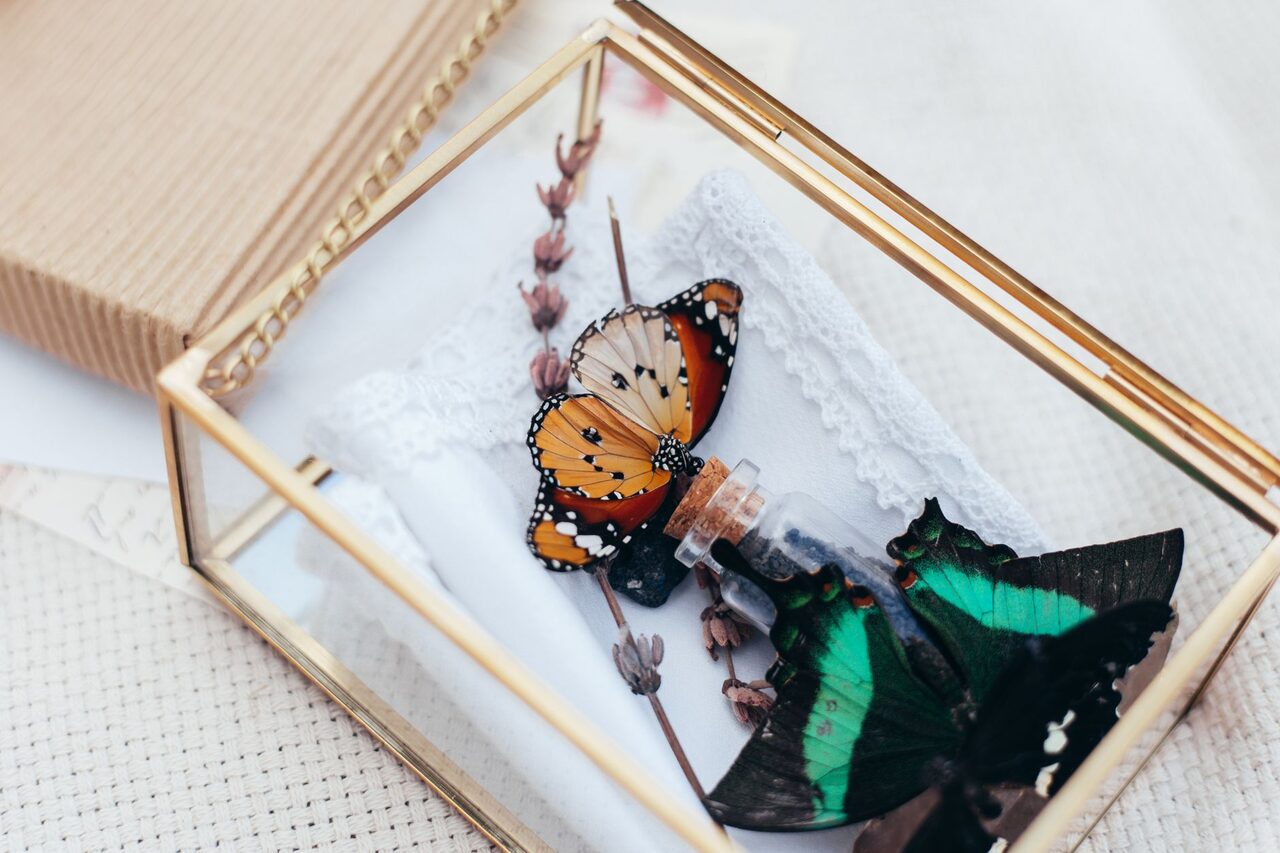
- "Framed butterflies are farm-bred." Maybe, but birdwing butterflies (Troides, including Troides helena) are protected in Indonesia and CITES-listed. If the label has no scientific name, skip it.
- "A small skull or shell is just decoration." Wild animal skulls, dried seahorses and certain shells fall under CITES or biosecurity rules. Australia caps seahorses at 4 per person.
How to check the seller before paying
- Ask for the species' scientific name on the receipt or label. Japan's METI makes seller documentation of the scientific name a condition of its personal exemption.
- Ask whether the shop can arrange or attach a SATS-LN (Indonesian CITES export permit). Serious shops usually work with a registered exporter and can ship the item to you with documents.
- If a seller says reptile leather "needs no papers", treat that as a red flag. METI advises buying elsewhere if a shop does not know the CITES status of its goods.
- Keep the original receipt and a photo of the label. You will need them when declaring at your destination airport.
What happens if you get it wrong?
In Indonesia, trading or keeping parts of protected animals carries up to 15 years in prison and/or a category VII fine (Rp5 billion), according to Hukumonline citing Article 40A of Law 32/2024 together with Law 1/2026. A buyer carrying the item to the airport can be caught up in that too.
In Australia, wildlife items without the right permit are seized, and DCCEEW lists penalties of up to 10 years in prison for importing a regulated specimen without a permit. Failing to declare animal products can mean an on-the-spot fine of up to A$7,280, according to DAFF. Other items are covered in souvenirs from Bali to Australia.
In Japan, goods with incomplete paperwork must be sent back to the exporting country or voluntarily abandoned at customs, according to METI. For food and other goods, see souvenirs from Bali to Japan.
Other rules on luggage and prohibitions are on our Bali rules page.
FAQ
Do cowhide or goat leather belts need a CITES permit? No, cattle and goats are not CITES species. Australia only asks that leather be fully tanned; finished items like wallets and shoes are generally allowed.
What about shark teeth? Several shark species are on CITES Appendix II. Without a clear species name you cannot prove the item is legal, so it is safer not to buy.
What if I already bought something without papers? Declare it at your destination airport and let officers decide. Hiding it turns a seizure into a much bigger problem.





Comments 0
No comments yet. Be the first to comment!