Gianyar is often treated as a synonym for Ubud, yet Ubud is only one district within it. Beyond the Ubud cafes, this regency holds 11th-century cliff shrines, stone reliefs that tourists barely touch, a world-class reef break at Keramas, sate languan on the Lebih coast, and a chain of silver and woodcarving villages. Here is how to explore Gianyar in 2026, complete with ticket ranges, a logical route and ways to cut your accommodation costs.
Ancient Temples & Archaeological Sites: Tampaksiring to Bedulu
- Pura Tirta Empul — Tampaksiring. A sacred spring temple with dozens of spouts used for the melukat purification ritual. Open roughly 08:00–18:00, tickets around Rp50,000–75,000, usually including sarong rental. Arrive before 09:00 while the pools are still quiet. View on Google Maps
- Pura Gunung Kawi — Tampaksiring. Ten cliff shrines about seven metres tall, carved straight into the gorge wall of the Pakerisan River and believed to date from the 11th century. You descend roughly 300 steps between rice paddies. Tickets around Rp50,000. View on Google Maps
- Goa Gajah — Bedulu. A hermitage cave with a huge carved entrance and ancient bathing pools in its courtyard. Tickets around Rp50,000; busiest between 10:00 and 14:00.
- Yeh Pulu — Bedulu. A genuine hidden gem: a 25-metre rock relief from the 14th century, only ten minutes from Goa Gajah yet almost always empty. Tickets around Rp15,000–25,000, reached by a short path along the rice fields.
Rivers & Waterfalls: Kanto Lampo and Tegenungan
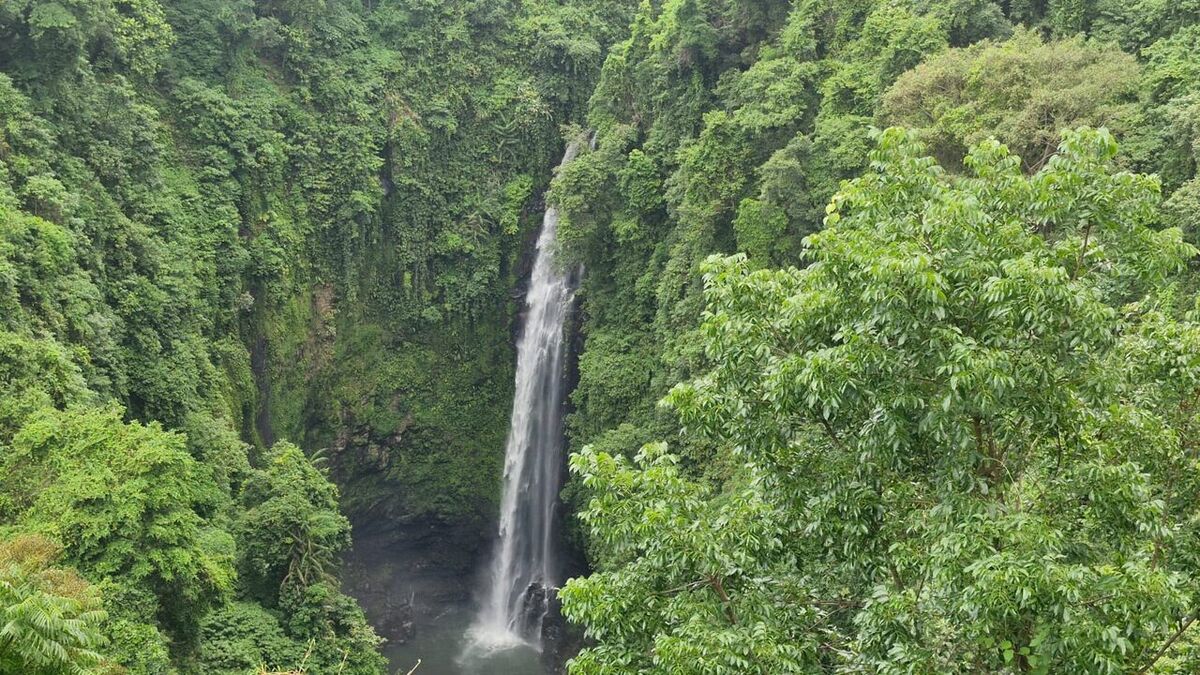
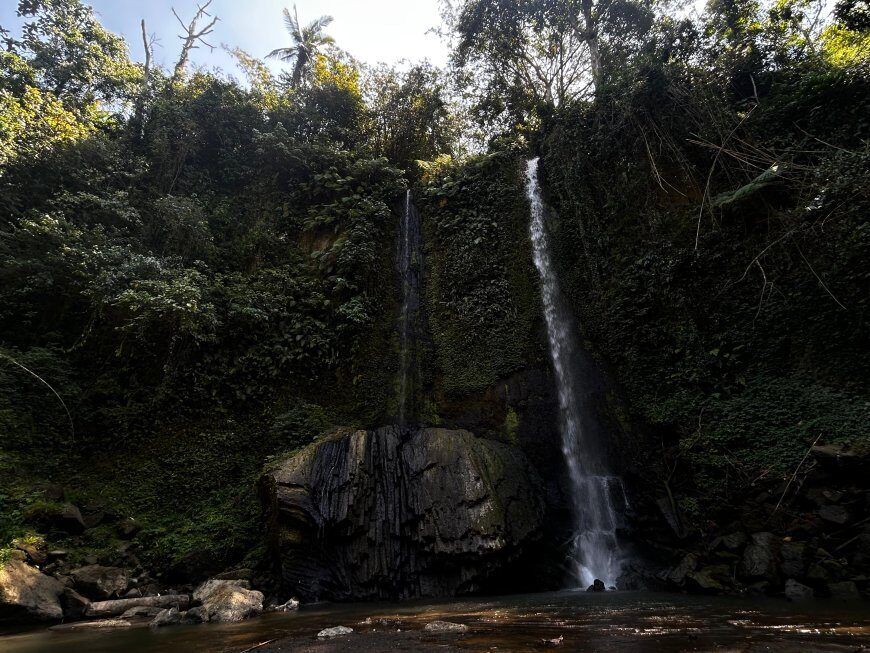
- Kanto Lampo Waterfall — Beng village, near Gianyar town. A tiered curtain of water over black rock, a photographer favourite. Tickets around Rp25,000, best in the morning, and non-slip sandals help a lot. View on Google Maps
- Tegenungan Waterfall — Kemenuh, Sukawati. A wide, high-volume waterfall and the easiest to reach from Denpasar or Sanur. Tickets around Rp20,000–25,000, open roughly 06:30–18:00. Avoid swimming when the water is muddy at the height of the rainy season.
The Gianyar Coast: Keramas and Lebih
- Keramas Beach — volcanic black sand with a reef break that has hosted international surf competitions. The waves suit intermediate and advanced surfers; beginners are better off watching. Entry is generally free with parking at Rp5,000–10,000. View on Google Maps
- Lebih Beach — a row of fish warungs right on the sand, famous for sate languan (sweet-spicy minced fish satay) and fresh fish soup. Expect around Rp30,000–60,000 per person, most pleasant just before sunset.
Craft Villages: Batubulan, Celuk, Mas & Sukawati Art Market
- Batubulan — the Barong and Keris dance is staged every morning at about 09:30 for roughly an hour; tickets around Rp100,000–150,000. The village is also a centre for sandstone carving.
- Celuk — Bali's silver and goldsmithing hub; many workshops welcome visitors and take custom orders.
- Mas — the woodcarving village, with galleries of museum-grade masks and statues.
- Sukawati Art Market — the legendary souvenir market, open roughly 08:00–18:00 with free entry. Bargaining is the norm: start at about a third of the quoted price. View on Google Maps
Family Attractions: Bali Zoo, Bali Safari & Taman Nusa
- Bali Zoo — Singapadu. A zoo with breakfast-with-the-animals programmes and evening shows. Tickets around Rp400,000–600,000 depending on the package; booking online is usually cheaper.
- Bali Safari & Marine Park — on the Prof. Ida Bagus Mantra bypass. Bus safaris, the Bali Agung show and a water play area. Tickets range from around Rp500,000 to over Rp1 million for full packages.
- Taman Nusa — a cultural park in the Sidan area showcasing miniature traditional houses from across Indonesia. Its operating status has changed in recent years, so confirm the opening hours before you go.
A 1–2 Day Route, Transport & Best Time
Day 1 from Ubud: Goa Gajah, then Yeh Pulu, up to Pura Gunung Kawi, on to Pura Tirta Empul, lunch in Tampaksiring, and finish the afternoon at Kanto Lampo. Day 2 from Sanur: the morning Barong dance in Batubulan, a stop in Celuk, shopping at Sukawati Art Market, a detour to Tegenungan, and sate languan at sunset on Lebih Beach — or watching the surfers at Keramas.
- Transport: scooter rental runs around Rp70,000–100,000 per day; a car with driver costs roughly Rp600,000–800,000 for 10–12 hours including fuel. For the spread-out temple route, a car with driver saves far more time.
- Best time: April to October for dry weather. Leave at 07:00–08:00 so you reach the temples before the tour buses.
- What to bring: a sarong and sash (many temples lend them), small cash notes for tickets and parking, and a change of clothes if you plan to join the melukat ritual.
Where to Stay & How to Save
Ubud suits you if temples, rice fields and food are the priority — Tampaksiring is only 30–40 minutes away. Sukawati or Batubulan is generally cheaper and handy for the art market plus quick access to Denpasar. The Keramas coast is the best pick for surfers and anyone who wants a seaside resort quieter than Seminyak.
Because Gianyar is best explored over two days, room rates usually become your biggest line item. Compare and book AccessiaPass hotel vouchers for properties in Ubud, Sukawati and the Gianyar coast — the difference you save easily covers every entrance ticket in this guide, plus all the sate languan you can eat at Lebih Beach.




Kommentare 0
Noch keine Kommentare. Schreiben Sie den ersten!