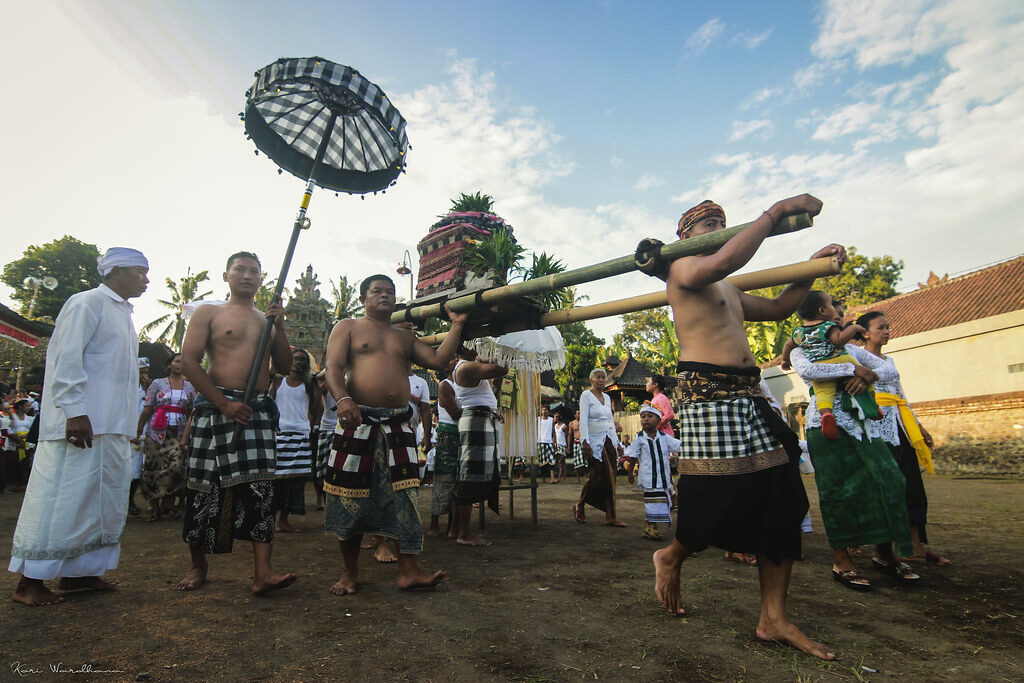
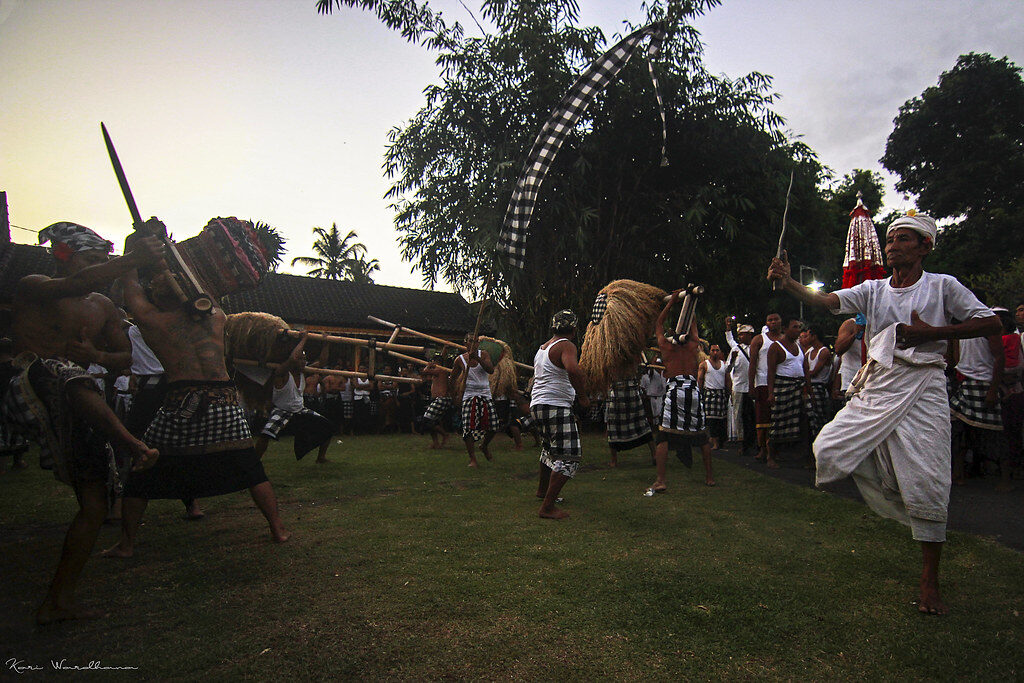
On every Kuningan Day, the forecourt of Pura Panti Timbrah in Desa Adat Paksebali, Dawan District, Klungkung, turns into the stage for a ritual with almost no equal in Bali. Seven jempana — decorated palanquins that seat the gods and ancestors — are shouldered by hundreds of village youths, then brought together and gently “clashed” until the litters touch. Locals call it Dewa Mesraman (Dewa Masraman), now listed as Indonesian Intangible Cultural Heritage.
How the ritual unfolds: from megibung to the jempana clash
- Midday: villagers prepare five kinds of lawar as a symbol of togetherness; the lawar is finished around 3 pm.
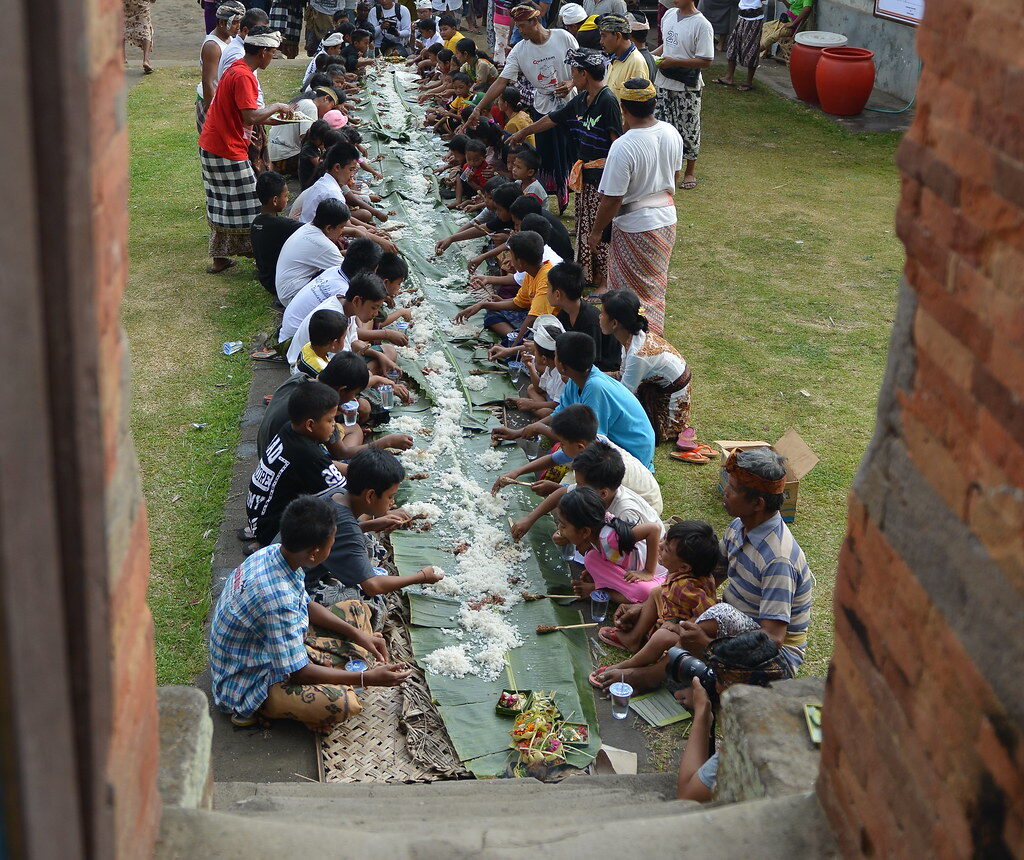
- Nunas paica & megibung: children receive paica, then adults share a communal meal in small groups.
- Mesucian: around 5 pm the seven jempana are carried to the Taman Segening water source beside Tukad Unda for purification.
- The climax: six jempana are spun, pushed and knocked together, while the one belonging to Ida Bhatara Ratu Lingsir stays still. Rejang Dewa and Baris dances accompany it.
When it happens: the 210-day pawukon cycle
The ritual falls exactly on Saniscara Kliwon of wuku Kuningan, so it does not follow the Gregorian calendar. The pawukon cycle repeats every 210 days, which means Dewa Mesraman happens only twice a year. The most recent Kuningan fell on 27 June 2026; the next Kuningan is expected on Saturday, 23 January 2027. Still confirm with the customary village closer to the date, as the hours of each stage can shift.
Watching it respectfully
This is a living ceremony, not a tourist show. Do not stand in the procession path, do not move close while the jempana are clashing, and follow the pecalang (village guards). The cuntaka rule also applies: families in mourning or with a recent birth usually do not attend.
Practical Info & Booking
- Location: Pura Panti Timbrah, Desa Paksebali, Dawan District, Klungkung — View on Google Maps
- Timing: every Kuningan Day; purification around 5 pm and the mesraman climax afterwards until dusk.
- Tickets: no entrance fee — bring a voluntary donation (dana punia).
- Traditional dress: a kamen (sarong) and a selendang/senteng sash at the waist plus a modest top are required; bring your own, as there is no rental on site.
- Photo etiquette: no flash, never shoot from a position higher than the shrines or the priest, do not block worshippers, and do not fly a drone without the committee’s permission.
- Access: about 1–1.5 hours’ drive from Sanur or Denpasar via Jalan Ida Bagus Mantra, and only minutes from central Semarapura. Parking is limited, so arrive early.
- Latest updates: search on Instagram for local documentation and announcements.
The climax only comes near sunset and the drive back to south Bali is long, so many visitors prefer to stay overnight around Semarapura or Sanur — an AccessiaPass hotel voucher makes it easy to lock in a room before the Kuningan week fills up.



Mga Komento 0
Wala pang komento. Maging una sa pagkomento!