Most visitors chase Tanah Lot or Uluwatu, yet one of Bali’s most influential temples stands right inside the city: Pura Mutering Jagat Dalem Sidakarya on Jalan Dewata, Sidakarya, South Denpasar. It rarely appears on sightseeing lists, but almost every major ceremony in Bali is connected to it.
The Brahmana Keling story and the title “Dalem Sidakarya”
According to the chronicles, a brahmin from Keling in East Java — a relative of King Dalem Waturenggong — arrived at Besakih during a great ceremony but was rejected and humiliated. He uttered a curse; crops died and disease spread. Once the king sought him out and honoured him, the ceremony was completed perfectly. The brahmin received the title Dalem Sidakarya — from sida (accomplished) and karya (ceremony) — and the temple was founded by royal decree around 1518 CE (Saka 1440).
Why this temple matters to Balinese ceremonies
- Tirta penyida karya: families staging mid-scale to major ceremonies request holy water here so that the rite is truly “sida karya”, complete and effective.
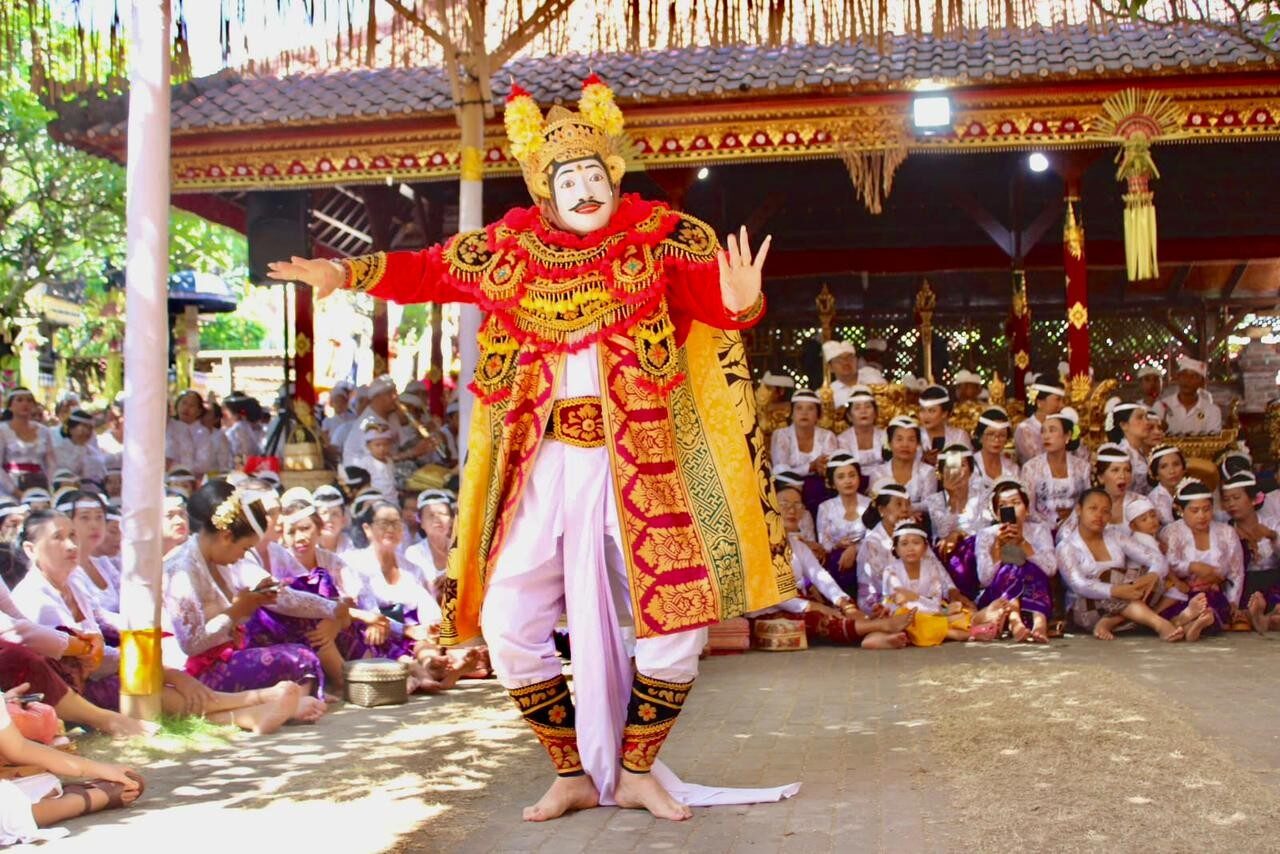
- Topeng Sidakarya: the sacred masked dance customarily performed to close major ceremonies, including the Tawur Kesanga rites on the eve of Nyepi.
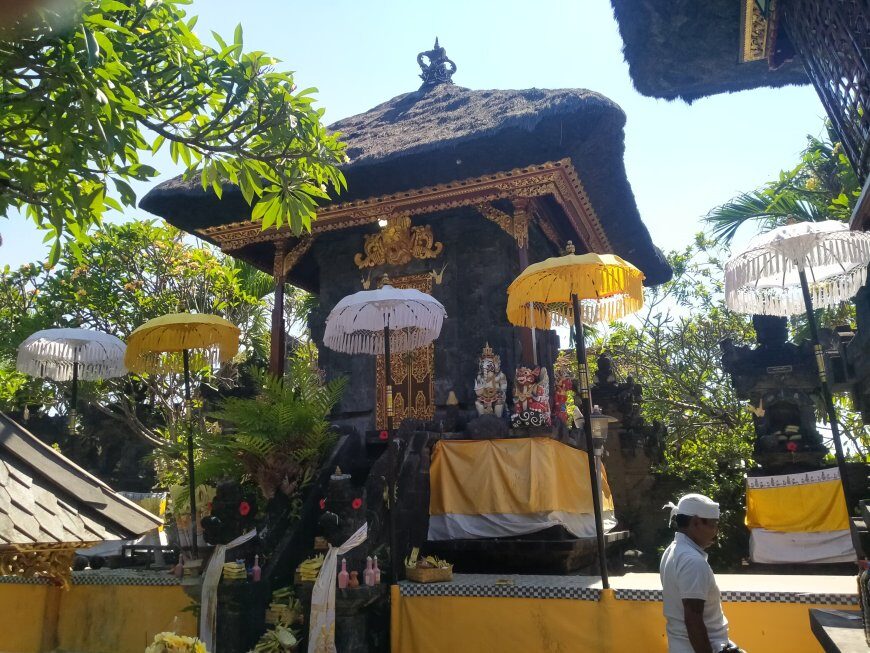
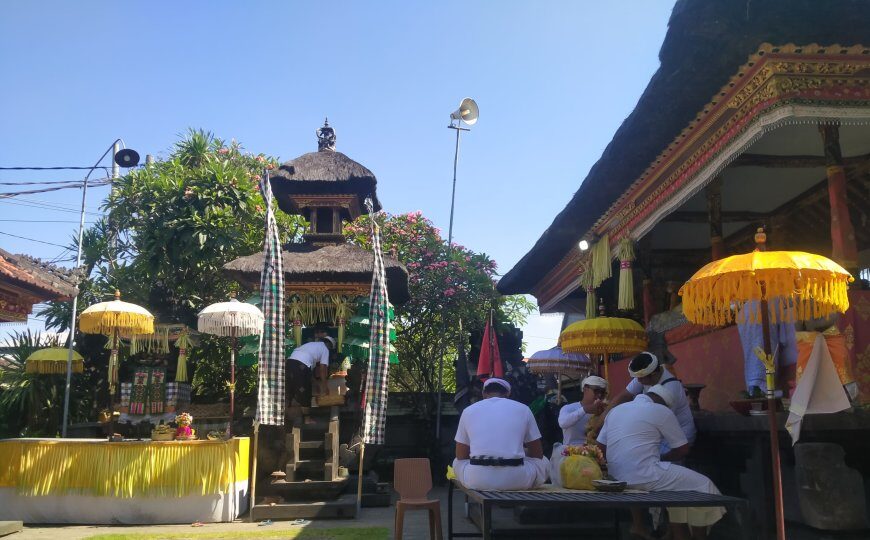
- Kahyangan Jagat status: the compound holds shrines representing the Sad Kahyangan, plus the shrine of Ida Batara Dalem Sidakarya.
What visitors can see
The grounds are shaded and calm — 30–45 minutes is enough to walk through and read the architecture. The piodalan (pujawali) falls on Saniscara Kliwon of wuku Landep, that is Tumpek Landep; the next one is Saturday, 14 November 2026, then every 210 days. During the piodalan the Tari Telek is usually performed alongside Barong and Rangda, and worshippers arrive from across Bali.
Practical Info & Booking
- Location: Jalan Dewata No. 16, Sidakarya, South Denpasar — View on Google Maps
- Visiting hours: there is no ticket counter with fixed hours; the outer courtyard can generally be visited during daylight. Enter the inner courtyard only with the pemangku’s permission, and avoid arriving during closed ceremonies.
- Tickets: no entrance fee — bring a voluntary donation (dana punia).
- Traditional dress: a kamen (sarong) and a selendang (senteng) sash at the waist, plus a modest covered top. Bring your own — this is a working temple, not a sightseeing site with rentals. Women who are menstruating do not enter the temple grounds.
- Photo etiquette: ask permission first, no flash, never climb shrines or walls, do not shoot from a position higher than the priest, and never block people who are praying.
- Access: roughly a 10–15 minute drive from either Sanur or Renon, and about 20 minutes from Ngurah Rai Airport outside rush hour. Parking is available in front of the temple.
- Info & ceremony dates: search on Instagram or ask the pemangku and the customary village officials directly.
Sitting exactly between Sanur and the city centre, the temple slots easily into a morning before the beach or after breakfast in Renon. Staying in Sanur or Denpasar with an AccessiaPass hotel voucher keeps a short visit like this relaxed instead of rushed.


Commenti 0
Ancora nessun commento. Lascia tu il primo!