Bali is one of the easiest places in the world to learn to stand up on a board: warm water year-round, consistent beginner waves and no shortage of instructors. The catch is that not every famous beach suits a beginner — some of the most photographed ones break directly over sharp reef. This guide separates the genuinely beginner-friendly beaches from the dangerous ones, then lists seven surf schools verified as still operating in 2026, with the rates they publish themselves.
Beginner Beaches: Sand Bottom First, Reef Later
- Kuta and Legian — a sand-bottom beach break running several kilometres, waves usually 0.5–1.5 metres, and zones patrolled by Balawista lifeguards. The most forgiving place to fall. Arrive between 06.00 and 09.00, before the lesson groups fill the water.
- Batu Bolong and Old Man's, Canggu — long, slow waves over a mix of sand, rubble and deeper reef, with a channel to paddle out through. Crowded from 07.00–10.00 and 16.00–18.00; Berawa next door is the fallback when it is packed.
- Baby Reef, Sanur — a soft peak roughly 700 metres offshore from Pantai Mertasari, reached by boat. The wave is slow and gives you plenty of time to stand, but the bottom is coral and at that distance you cannot simply walk in when you tire: mid to high tide only, and wear reef boots.
- Pantai Medewi, Jembrana — the long left-hander longboarders dream about, but the bottom is slippery round stones. Save it until you stand up reliably.
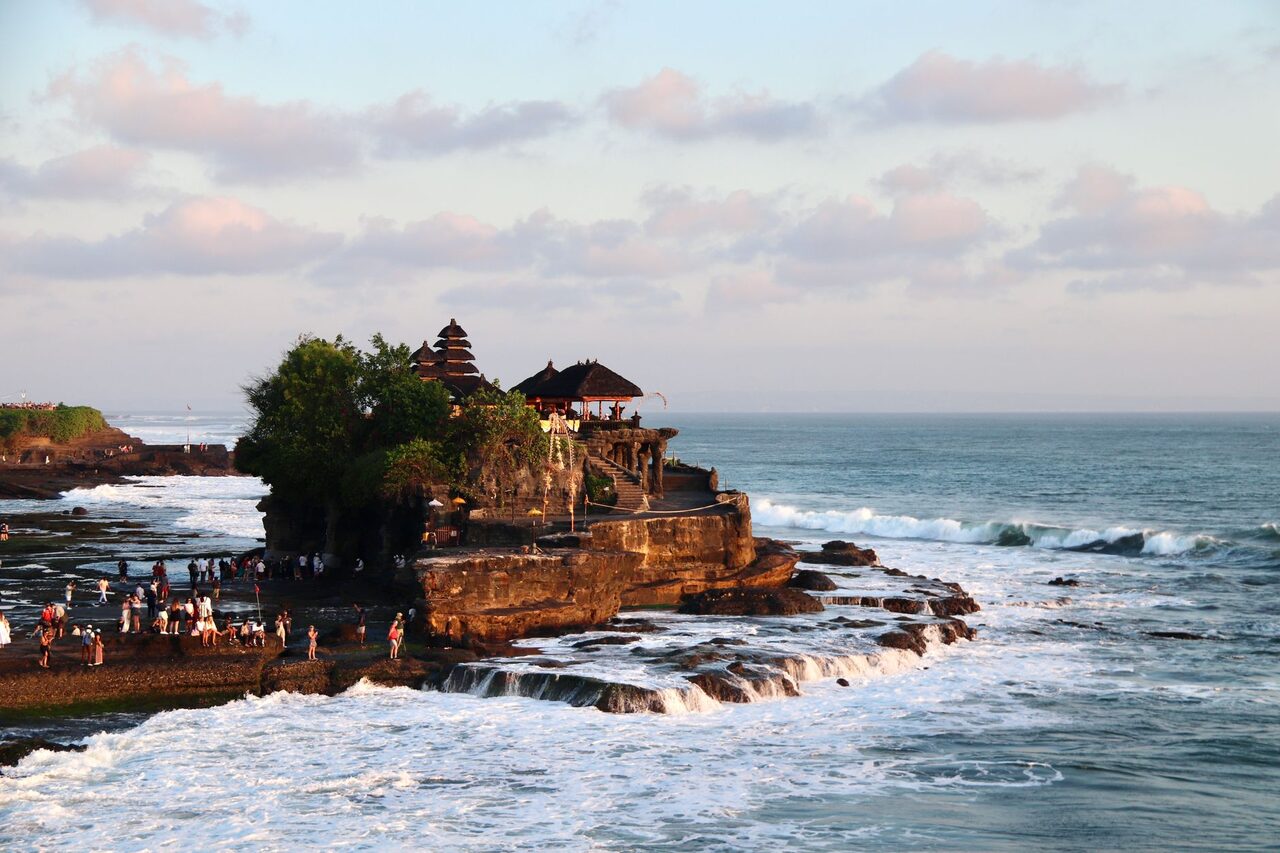
What is not for beginners: Uluwatu (you enter and exit through a cave, over shallow reef, against a strong outgoing current), Padang Padang (a shallow barrel straight over reef), Bingin, Balangan and Keramas. The waves photograph beautifully — that is not a reason to try them on day three.
Swell Seasons, Tides and Board Rental
- April–October (dry season): south-easterly trade winds make the west and south coasts — Kuta, Legian, Canggu, the Bukit — offshore and clean. Peak months are May to September.
- November–March (wet season): the wind swings around from the north-west and the east coast takes over — Sanur, Serangan, Nusa Dua, Keramas. Beginners should shift base to Sanur in this window.
- Tides: aim for mid to high tide. More water over the bottom covers the reef and softens the currents.
- Board rental: roughly Rp75,000–150,000 per hour and Rp200,000–325,000 per day; street rentals in Canggu undercut the hotel-arcade surf schools in Kuta. Delivery usually adds Rp100,000 with a two-day minimum.
Lesson Costs and What Is Included
A standard session runs two hours. The 2026 range: group lessons (minimum three people) Rp190,000–400,000 per session, semi-private for two Rp250,000–500,000, and one-to-one private Rp325,000–700,000. A five-session group package can work out around Rp182,000 each. Most rates include a foam board, rash guard, drinking water and a 15–20 minute safety briefing; transport, insurance and session photos (around Rp550,000) are charged separately. The question few people ask but that matters most: what is the instructor-to-student ratio? More than four students per instructor means thin supervision.
Safety and Line-Up Etiquette
- Use a 7–9 foot softboard; a shortboard is just a shortcut to frustration.
- Long-sleeve rash guard and reef-safe sunscreen; reef boots are essential at Sanur, Medewi and Balangan.
- Balawista flags: red-and-yellow marks the lifeguard-patrolled swimming zone, plain red means stay out of the water, and a black-and-white chequered flag marks the surfboard zone — that is the one you want. The zones move with conditions, so check again every day.
- Signs of a rip current: a lane of water that looks calmer and darker between the lines of breaking waves, dragging foam seaward. The patch that looks peaceful is the dangerous one. Do not fight it — hold on to your board because it floats, raise an arm to signal the lifeguard, then paddle parallel to the beach until you are clear.
- Priority belongs to the surfer closest to the peak; do not drop in and do not snake round the back. On a reef break paddle out through the channel, but on a beach break punch straight through the whitewater rather than cutting across someone's shoulder.
Practical Info & Booking
- UP2U Surf School Bali — Jl. Pantai Kuta No. 32, Legian, Kec. Kuta, Badung; open 07.30–17.30. Group from Rp190,000 per session, private Rp325,000, a five-session group package Rp910,000. A 30-minute online theory module is sent the day before; transport not included. View on Google Maps
- Odysseys Surf School — Mercure Kuta Hotel Arcade, Jl. Pantai Kuta, Kuta. Operating since 2003. Two-hour sessions: group Rp455,000, semi-private Rp580,000, private Rp790,000, plus a Rp130,000 surcharge in the June–September peak. Includes board, rash vest, helmet, insurance, pickup across Kuta–Nusa Dua, towel and lockers. View on Google Maps
- Rip Curl School of Surf — six locations: Sanur (Hotel Prama Beach, Jl. Cemara), Kuta–Legian (Mamaka by Ovolo, Jl. Pantai Kuta No. 32), Jimbaran, Canggu and Yeh Gangga. ISA-certified instructors, with helmet, impact vest and video analysis included. Rates are not published — request a quote. View on Google Maps
- Nyangko Surf School — Canggu; teaches at Batu Bolong and moves to Berawa when the swell is too big. Private from Rp400,000, group from Rp350,000 per two-hour session, including board, rash guard, zinc and beach transfer. View on Google Maps
- Sanur Surf School — Jl. Pantai Mertasari, Denpasar Selatan. Two-hour private packages: 3 sessions Rp2,100,000, 5 sessions Rp3,350,000, 10 sessions Rp6,500,000. The premium package uses a boat out to Baby Reef. View on Google Maps
- Bali Surf Pro — Uluwatu–Pecatu, teaching at Balangan for those who already stand up. Per two-hour session: group Rp400,000, semi-private Rp500,000, private Rp600,000; three-day private package Rp1,700,000; photos Rp550,000. View on Google Maps
- Padang Padang Surf Camp — Jl. Labuan Sait, Pecatu, Kec. Kuta Selatan; their official site is balisurfingcamp.com. Rooms from around £560 per person per week sharing, including breakfast, lunch and a daily coaching session; surf lessons are charged separately at about £20 per session for camp guests and £29 for non-guests. View on Google Maps
- Instagram: search Bali surf schools on Instagram
Canggu is most practical if you want to walk to Batu Bolong; Kuta and Legian are cheapest and closest to the beginner beaches; Sanur is the smart call from November to March; Uluwatu only makes sense once you can stand up. Pick the area first, then lock in the room: compare prices and book your hotel voucher on AccessiaPass before the July–August peak, because a few hundred thousand rupiah a night saved is the same as two extra lessons.






Comments 0
No comments yet. Be the first to comment!