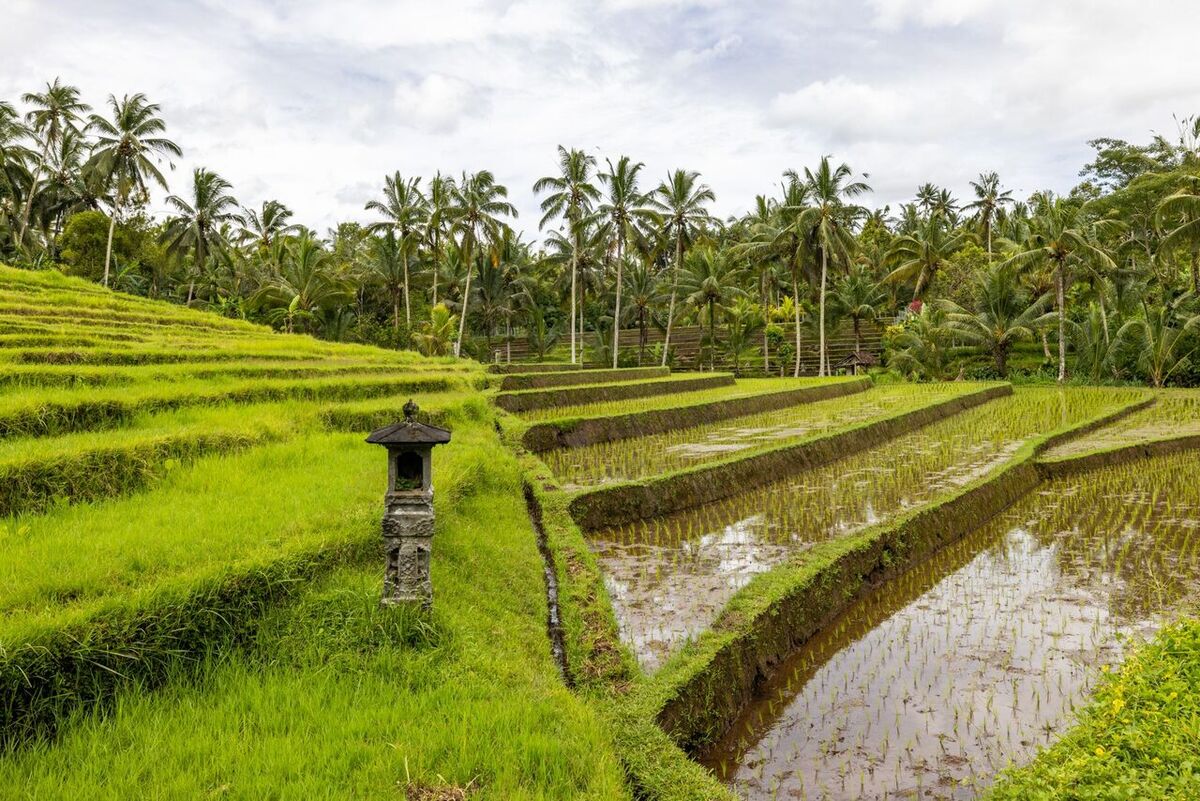
Ubud, Sidemen, and Munduk all sell the same idea of "green Bali": terraced rice fields, valleys, and cool air. But they feel completely different. Here is an honest comparison to help you choose a nature base — not a beach or city area — so your holiday is not spent on the road.
The character of each area in short
- Ubud (Gianyar) — a village that became a small town: hundreds of cafes, galleries, yoga classes, and rice fields just 10 minutes from the centre. The busiest, but also the most complete.
- Sidemen (Karangasem) — a valley of terraced rice fields framed by Mount Agung. Very quiet, almost no nightlife, and still feels like Bali 30 years ago.
- Munduk (Buleleng) — a coffee and clove plantation village at roughly 800–1,200 m above sea level. The coldest, the mistiest, and the richest in waterfalls.
Access & driving time from Ngurah Rai Airport
- Ubud — about 37–40 km, 60–90 minutes (close to 2 hours during the 16.00–19.00 rush). A private car transfer runs about Rp300–450k.
- Sidemen — about 57–60 km, 1 hour 50 minutes to 2.5 hours; late afternoon it can stretch to nearly 3 hours. Transfers are roughly Rp700k–1.25m depending on car size.
- Munduk — about 80 km, 2.5–3.5 hours via Bedugul. The road has sharp bends; try not to arrive after dark.
Nightly price ranges
- Ubud — homestays Rp300–700k; mid-range hotels and villas Rp700k–1.7m; luxury resorts from around Rp3m upward. The widest choice, so the easiest place to find a deal.
- Sidemen — family guesthouses Rp250–400k; mid-range Rp600–900k including breakfast; boutique places with an infinity pool facing Mount Agung Rp1.5–3m.
- Munduk — homestays from around Rp330k; nature resorts such as Munduk Moding Plantation typically Rp1.8–4.5m depending on season.
Real things to do around each base
- Ubud: Tegallalang (about Rp25k, arrive before 08.00), the Campuhan Ridge Walk (free, roughly 2 km, best at sunrise), Monkey Forest, the art market, and dozens of cooking and yoga classes. Maps
- Sidemen: Bukit Belong in Gunaksa (around Rp10k, a 30–45 minute green-hill trek), Gembleng Waterfall (around Rp15k plus parking, with tiered natural pools), and Besakih Temple (Rp80k for Indonesians, Rp150k for foreigners, including sarong, guide, and shuttle; open 07.00–18.00). Add endek weaving and rice-field walks. Maps
- Munduk: Lake Tamblingan (traditional canoes and lakeside forest), Melanting Waterfall (a very cheap ticket, around Rp5–20k; the stairs down are steep), plus Golden Valley waterfall and coffee-plantation trails. Maps
Food, crowds, signal & coworking
- Ubud: almost unlimited dining — vegan, specialty coffee, fine dining. Coworking spaces and fast fibre internet make it the safest choice for remote work. The downside: traffic on Jalan Raya Ubud and Monkey Forest road.
- Sidemen: local warungs and hotel restaurants, around Rp30–70k a dish. Some cafes now offer sockets and Wi-Fi, but the network still fluctuates — carry a backup eSIM.
- Munduk: the most limited; dinner is easiest at your accommodation. Mobile signal is thin at the valley floor and fog usually rolls in around 15.00.
Which one? A quick decision guide
- Choose Ubud if this is your first visit, you want variety in food, spas, and classes, the easiest airport access, or reliable internet for work.
- Choose Sidemen if you want rice fields without crowds, Mount Agung views, the friendliest room rates, and plan to continue to Besakih or Amed.
- Choose Munduk if you can handle the cold, love waterfalls and misty trekking, and do not mind long winding roads.
- The ideal 7-day mix: 3 nights Ubud → 2 nights Sidemen → 2 nights Munduk, then descend to Lovina or return via Bedugul.
- Avoid switching base every night; a single move eats 2–3 hours of driving.
Because these three areas span such a wide room-rate range, compare hotel voucher prices on AccessiaPass before you commit to a base — the difference often makes a better room class affordable. Buy the voucher first, redeem it once your dates are fixed, and do that roughly two to four weeks before departure, because properties with rice-field and valley views fill up first. Compare now, lock in your rate, then plan the route at your own pace.




Comments 0
No comments yet. Be the first to comment!