About 10 kilometres from Amlapura, on the upland road through Bebandem district, sits a village with no ticket booth, no welcome arch and nothing to sell you: Desa Adat Bungaya. Bungaya belongs to Karangasem's cluster of old Bali Aga–Bali Mula villages — kin to Tenganan, Asak and Timbrah — yet it has stayed almost untouched by mass tourism.
An Old Village Layout That Is Still Intact
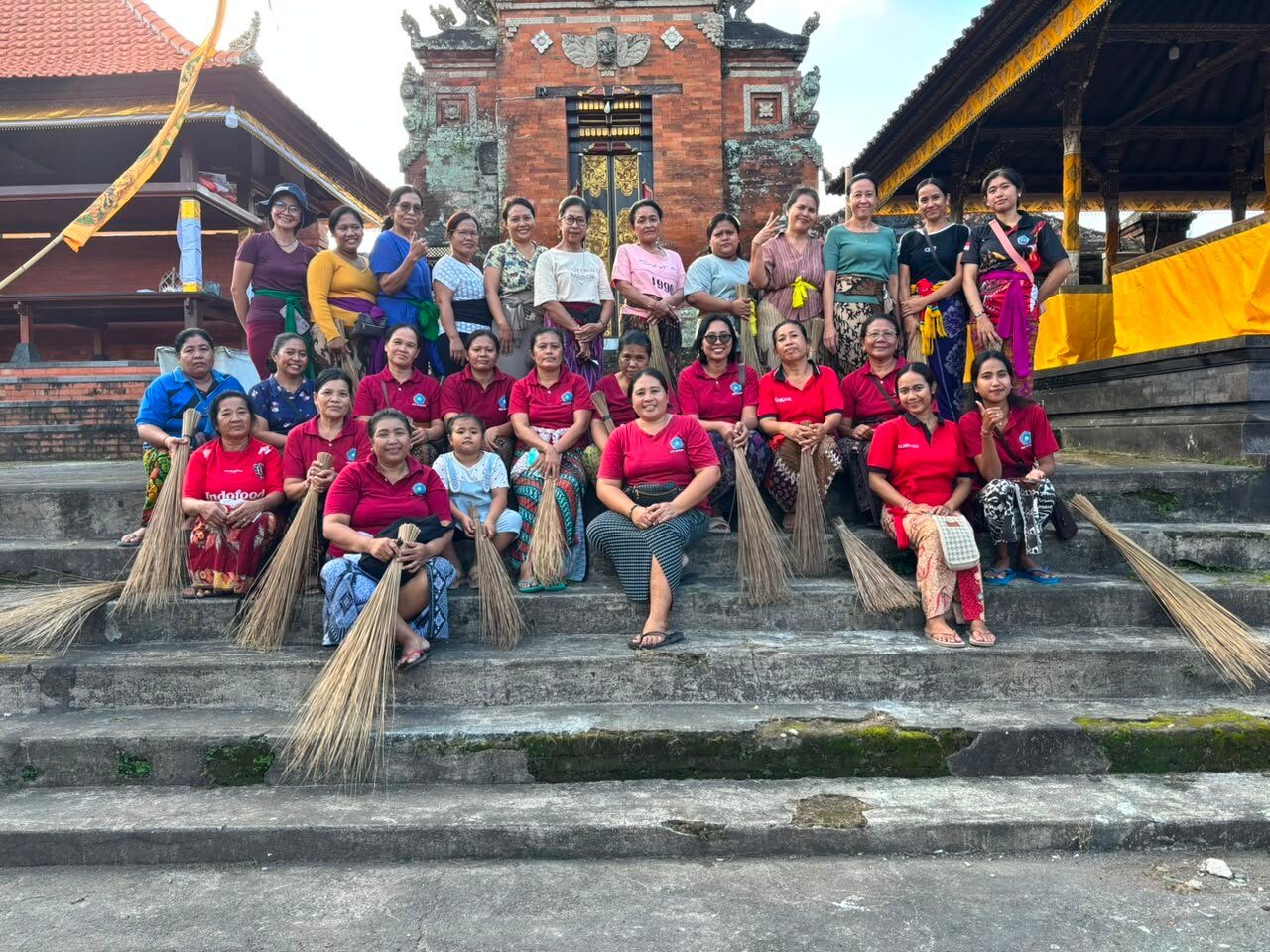
Bungaya is organised by customary logic, not by the highway. At its centre stand Pura Bale Agung and Pura Puseh, ringed by the wantilan where village elders deliberate and agricultural rites take place. As a customary village, Bungaya covers 15 banjar adat across two administrative villages. Its lanes hold stone-walled compounds, split gateways and long communal pavilions whose purpose is functional, not decorative.
Usaba Dangsil: A Ceremony That Does Not Come Every Year
Bungaya is best known for Usaba Dangsil (also called Usaba Gede), inscribed as Indonesian Intangible Cultural Heritage in 2017. Do not arrive expecting to watch it — it genuinely is not an annual event.
- Once held roughly every two years; lately far rarer — closer to a ten-year rhythm — because the cost is enormous
- The 2016 edition followed a gap of well over a decade and drew tens of thousands from Bungaya and neighbouring villages
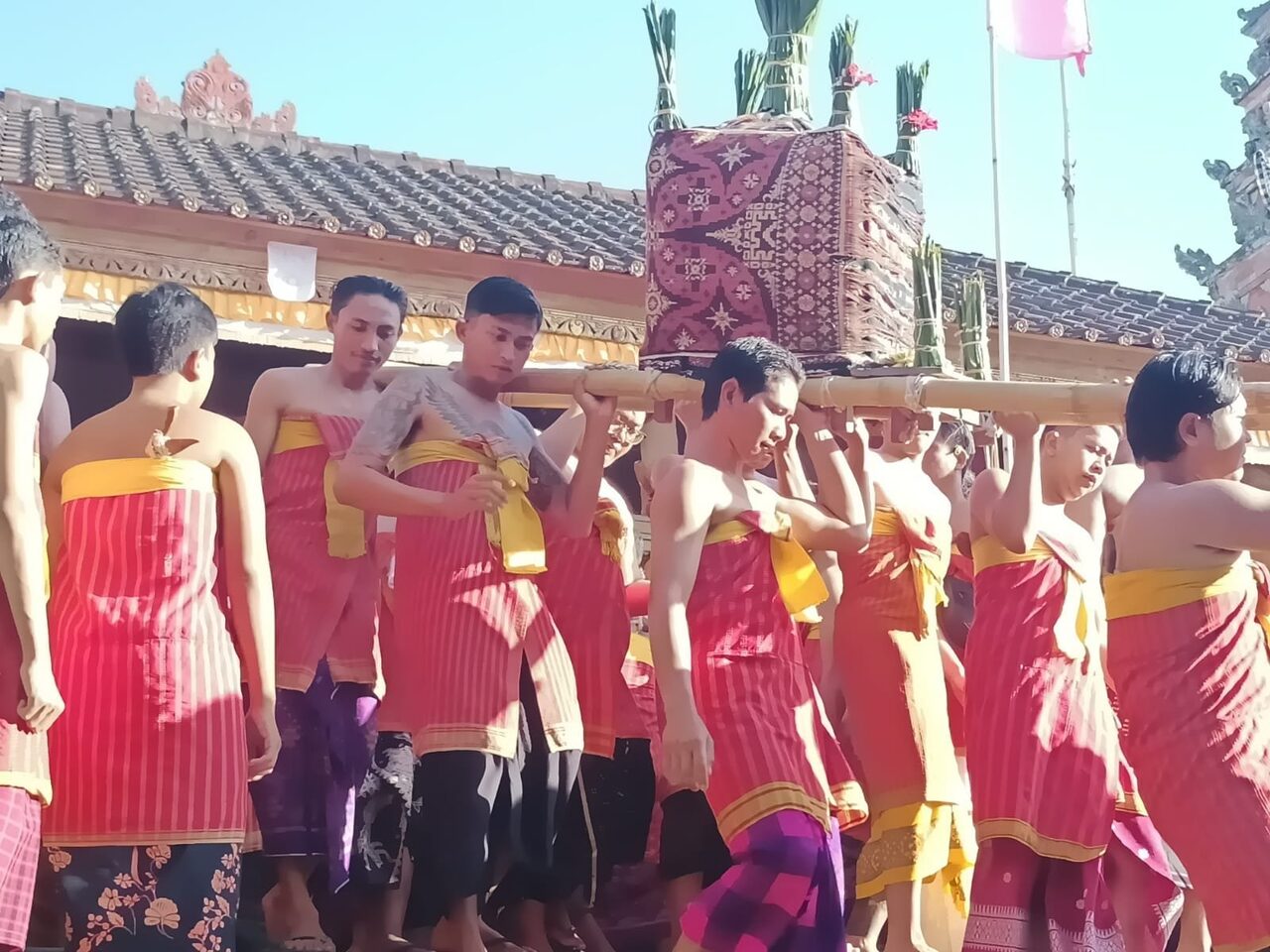
- Dangsil: tiered offering towers of foliage, cakes and farm produce; the tallest reaches around 16 metres
- The cycle runs about two months: melasti, mesesedep, the all-night Tari Anda, then the closing procession
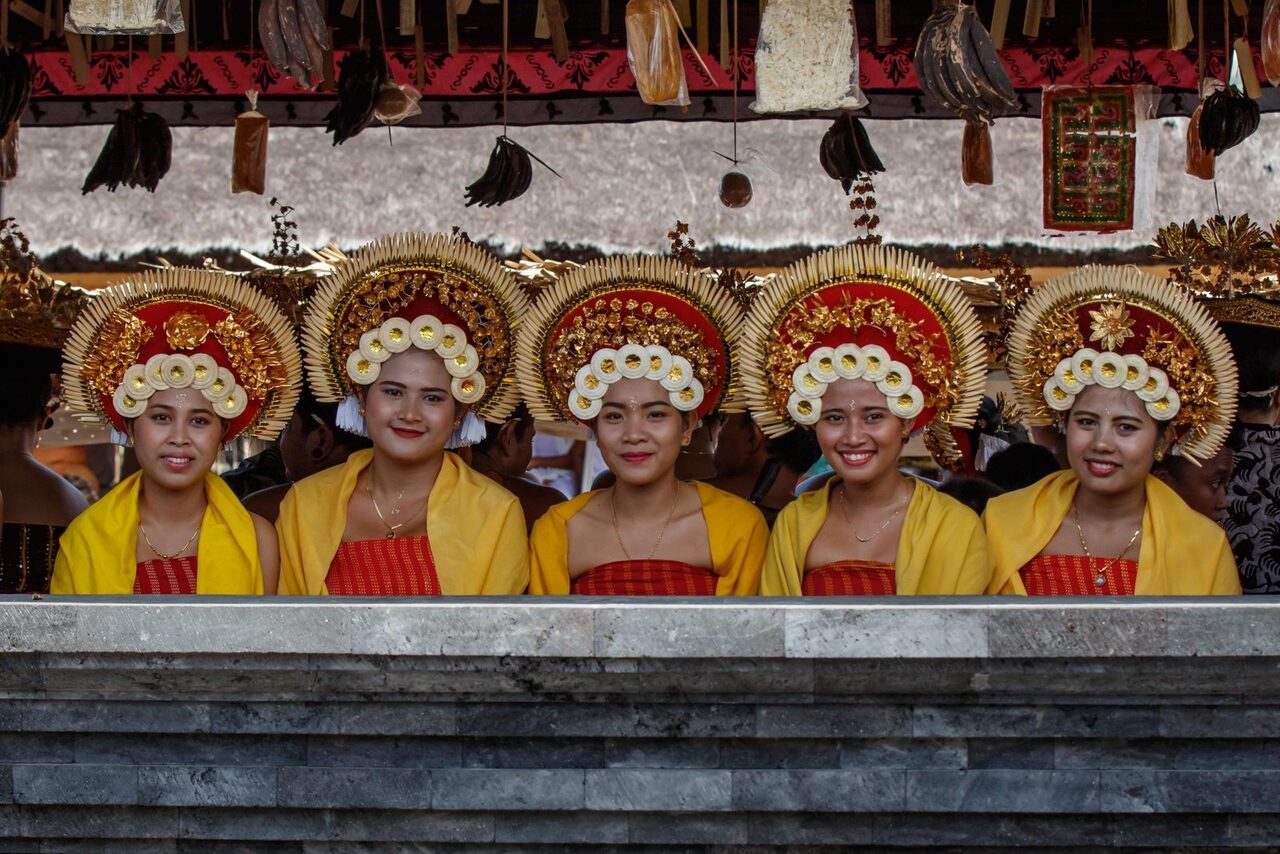
- Its point is not spectacle but the induction of the daha and teruna — the village's young women and men — into adat adulthood
Selonding, Weaving and How to Visit Politely
Bungaya keeps a set of gamelan selonding, the old sacred iron gamelan sounded only for particular ceremonies — so do not expect a scheduled performance. Village weaving groups still produce cloth with patterns typical of the eastern highlands. Because Bungaya is not a paid attraction, courtesy replaces a ticket: ask before photographing people or temple grounds.
Practical Info & Booking
- Location: Desa Adat Bungaya, Bebandem, Karangasem — View on Google Maps
- Getting there: around 10 km from Amlapura, 30–45 minutes' drive from Candidasa; easiest by rented car or scooter. Contact the prajuru desa adat if you want a deeper visit.
- Hours & entry: no opening hours and no ticket — this is a village, not a sight. Come between morning and late afternoon; offer a voluntary donation if you join a customary activity or use a local guide.
- Dress code: a kamen and sash are required inside temple grounds; during ceremonies avoid revealing clothing and never stand higher than the officiating priest.
- Social media: no confirmed official account — search on Instagram for residents' documentation and ceremony news.
Bungaya makes most sense as a half-day from an east Bali base — paired with Sibetan or Tirta Gangga — rather than a dash from Kuta. If you would rather stay in Candidasa, Amlapura or Sidemen, compare AccessiaPass hotel vouchers for the Karangasem area first.

Comments 0
No comments yet. Be the first to comment!